
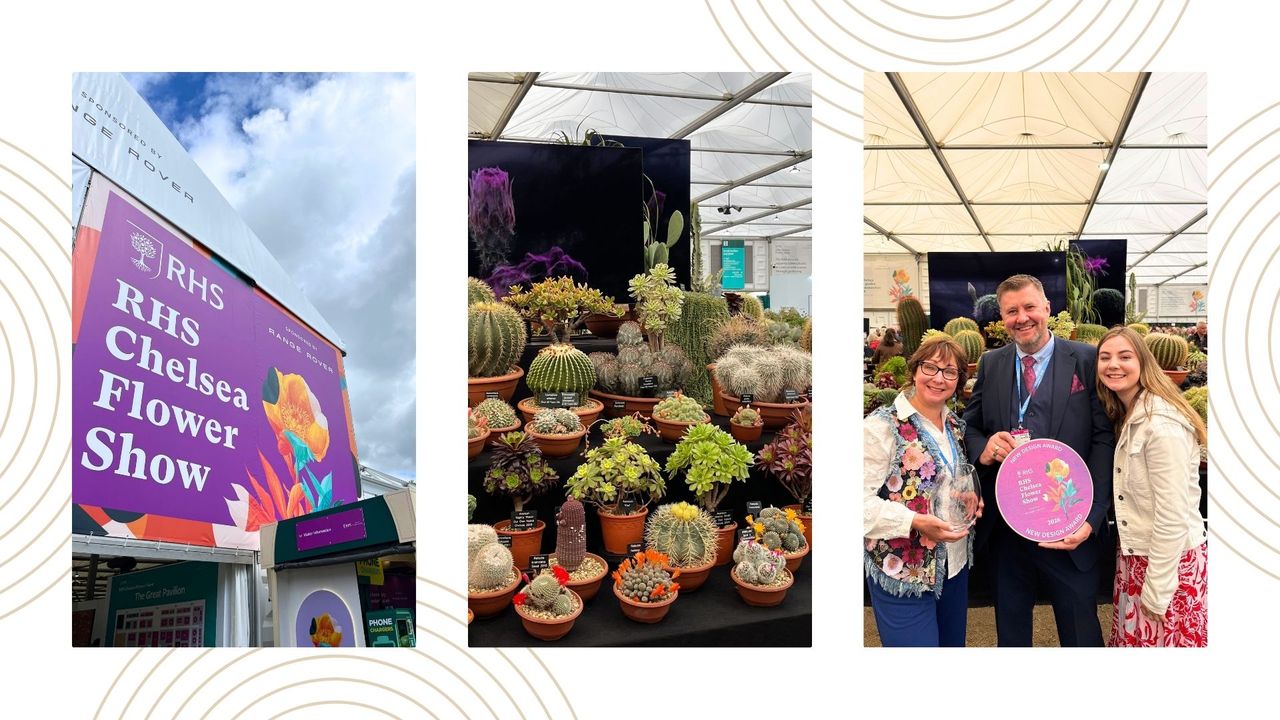
Whilst there's no shortage of coverage when it comes to the iconic RHS Chelsea Flower Show, it's hard to get a real sense for what it looks like behind the scenes. Especially for what it takes to be an exhibitor and what the process of having a stand in the Grand Pavilion looks like.
Although you can watch the RHS Chelsea Flower Show from just about anywhere, there is some behind-the-scenes information you just can't pick up on the TV. Amongst the show gardens, star-studded celeb visitors and floral dresses are the expert growers that exhibit at the show to not only pick up a medal or two but to display their horticultural craftsmanship.
These experts are truly the best at what they do, and if you're lucky enough to visit the show, they can be found proudly presenting their thriving stands in the Grand Pavilion.
On our visit to the show this year, we had the delight to chat with one of the professional growers, Ottershaw Cacti (@ottershaw_cacti on Instagram) and get a true sense of what it takes to be an exhibitor at the biggest gardening show in the world.
A post shared by Gardens Illustrated (@gardens_illustrated)
A photo posted by on
Walking into the Grand Pavilion is like walking through the gates of heaven for anyone green thumbed. It is filled wall to wall with the very best of every plant species you can think of, from tulips to lupins there is almost too much to see.
But how exactly do these exhibitors prepare for such a important, large-scale event? Well, we were lucky enough to chat to Daniel and Lottie from Ottershaw Cacti, who let us in on just how much work goes into an award-winning display.
"We started this process in October," starts Daniel. "It’s a lot of hard work. We do a mock-up at home so we have a rough idea of how many plants we need to bring. We planned on bringing 120, and then we got here, and we found that they’d made it too big, so we needed another 67. We get one van and do multiple trips, we ended up doing five trips."
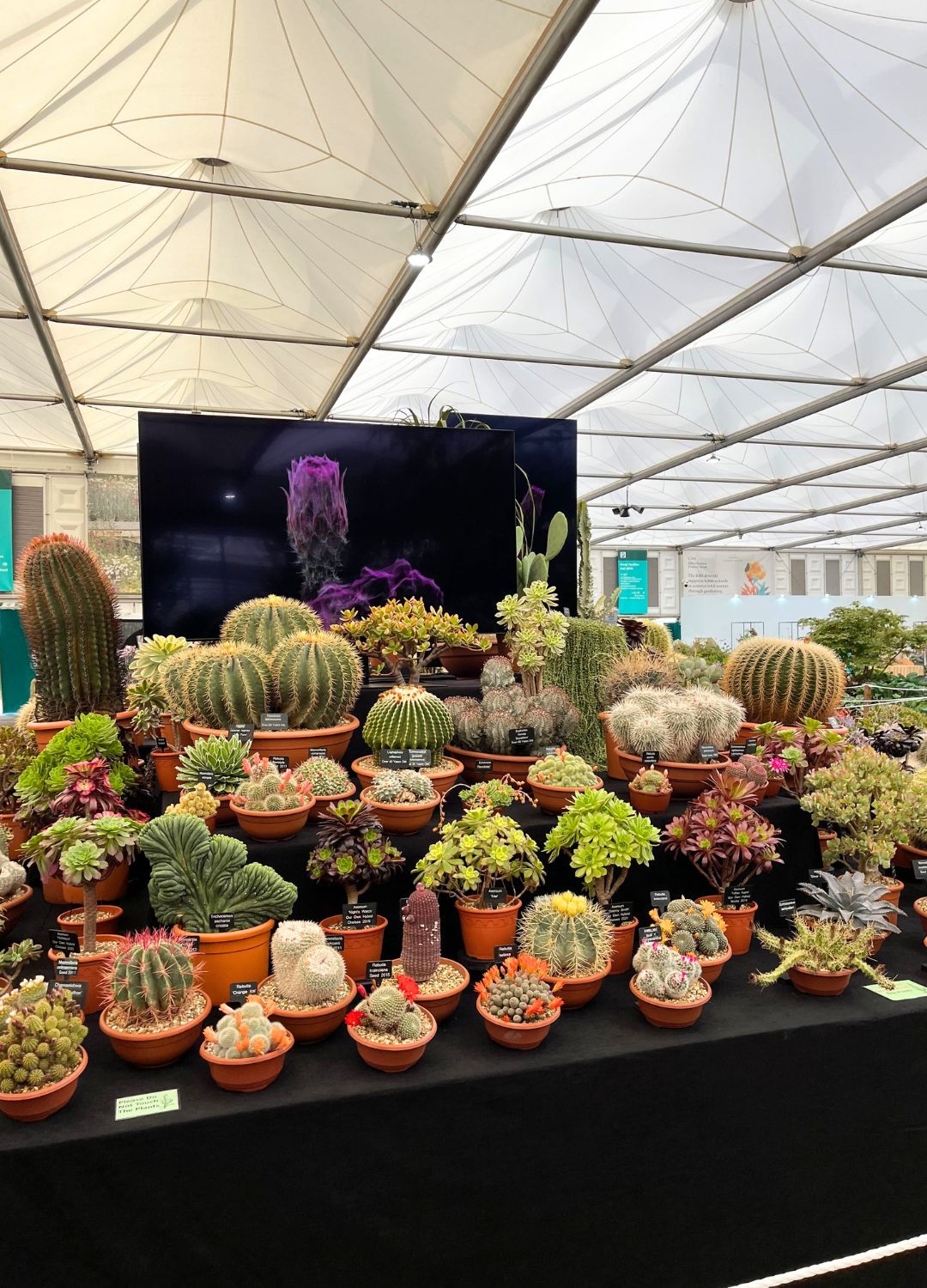
Their stand is packed full of blooming cacti, with new additions as well as plants that are around 60 years old. With such a variety, I was curious as to how they decide what makes the stand and what stays at home.
"For Chelsea is kind of all picks itself, so we bring everything that looks good, big or old. We often pick things that are in flower as well. So we’ve got some Rebutias, Mammillarias, and Astrophytums as well that are all in flower," explains Lottie.
"I know, cacti are a bit like family heirlooms, so they get passed on as they often outlive their owners," says Daniel, explaining how they come to have numerous plants hitting 60 years of age.
Whilst you might not think of cacti when choosing your late summer flowers, many species of cacti have impressive, colourful blooms. Their newest release, however, may not boast colourful florals, but its beauty is undeniable.
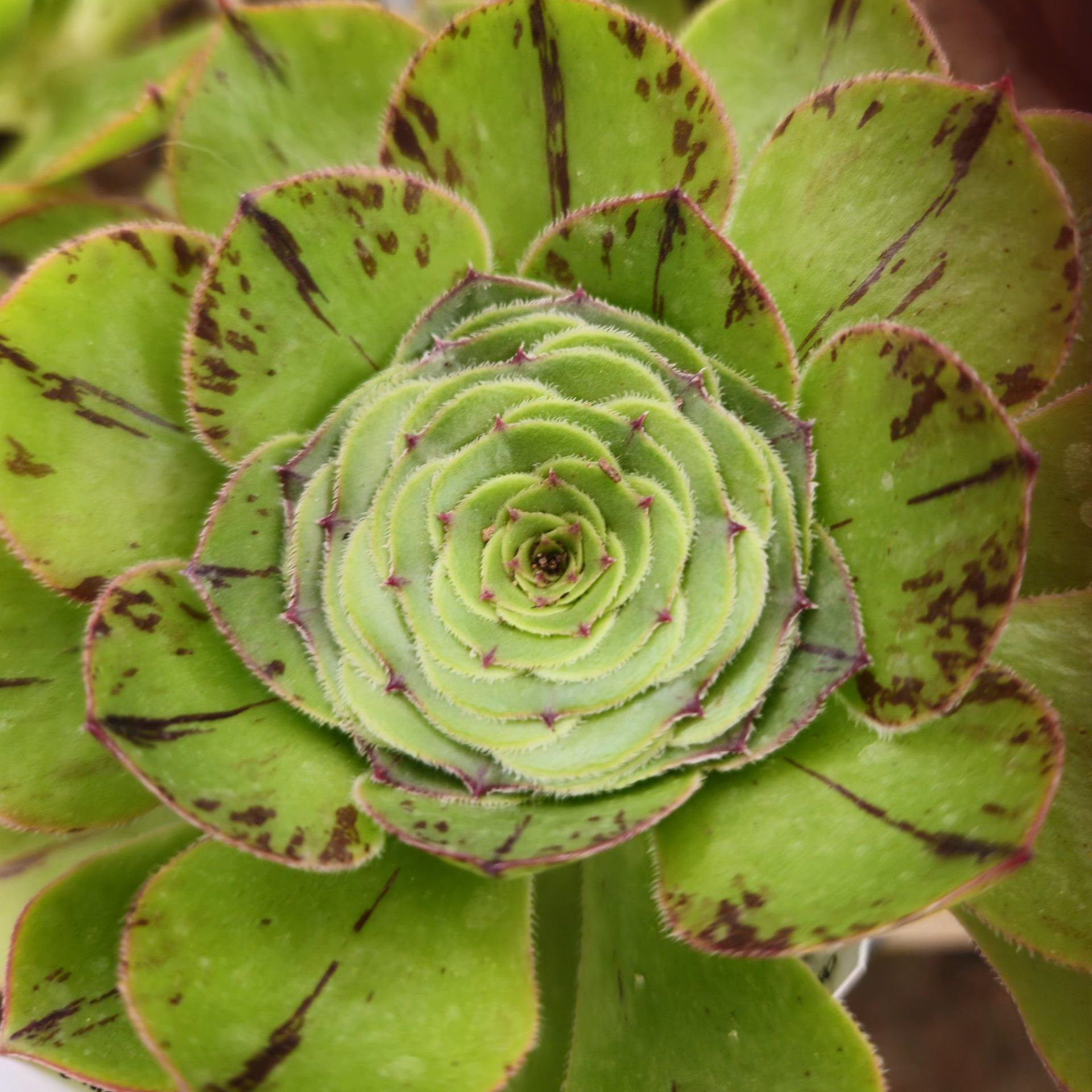
The new release is an aeonium which they'll artfully grow from a seedling. One of the two new aeoniums, which you see pictured above, is green-headed and aptly named 'Matcha'. Another is a tall, single-headed dark aeonium called 'Otter Rose'.
Curious as to how they name their newest arrivals, I asked who makes the call.
"We do it together," says Lottie. "But we were a bit pushed for this name. So, Dad wanted ‘Grogu’, but I wanted ‘Matcha’. They were both on theme with what’s coming out and what’s trending, but we went with ‘Matcha’ in the end."
They certainly chose the right name in the end, and the right selection of cacti, as Ottershaw rightfully took home the gold and the RHS New Design Award. A well-deserved win indeed!
A post shared by Charlotte Jackson (@ottershaw_cacti_)
A photo posted by on
Stock up on cacti essentials


Inspired by these expert growers? Add some blossoming cacti to your own home and learn how to care for indoor plants to transform your space with a little natural beauty.