After the devastating Covid-19 pandemic, most people believe their lives have returned to normal. However, several recent outbreaks such as Ebola, Nipah virus, Hantavirus, mpox (monkeypox) and avian influenza, are under strict surveillance by global health agencies to reduce the risk of another pandemic.
Currently, there are fake news reports about the Ebola virus entering Thailand, causing some people to panic. However on May 29, the government issued an official report refuting the news. One female visitor, who came from an infected zone in the Democratic Republic of the Congo, was quarantined at Bamrasnaradura Infectious Diseases Institute by the Department of Disease Control. However, it was discovered that she had no history of exposure to the disease.
To educate the public about infectious diseases and consider whether Thailand is ready to deal with emerging and re-emerging diseases, Kasetsart University organised a forum titled "The Future Of Global Epidemics: How Prepared Is Thailand In The Era Of Emerging Infectious Diseases?" on its online platforms.
Asst Prof Dr Waraphon Phimpraphai, dean of the Faculty of Veterinary Medicine, Kasetsart University, explained that in the past, people were familiar with the concept that "diseases can spread from animals to humans", but currently, some diseases can be transmitted both ways -- animals to humans and vice versa.
"We refer to these infections as zoonotic diseases which transmit naturally between animals and humans, such as Covid-19 and avian influenza. Over 200 known types exist, and they account for 75% of all emerging infectious diseases," explained Asst Prof Dr Waraphon.
Additionally, climate change is accelerating the spread of zoonotic diseases through multiple interconnected pathways. At least 58% of known human infections are made worse by climate hazards. Asst Prof Dr Waraphon explained how climate change triggers disease spread, particularly through the range expansion of vectors, habitat disruption, wildlife migration shifts and permafrost thaw.
Vectors are disease-carrying insects. The Asian tiger mosquito traditionally feeds during the day, but climate change is altering this behaviour. Their feeding time is no longer limited to daytime. Additionally, warmer temperatures allow mosquitoes and ticks to survive in previously cooler regions, bringing dengue, Lyme disease and malaria to new populations.
Habitat disruption, such as deforestation and changes in land use, forces wild animals to hunt closer to cities, which brings them closer to humans and increases opportunities for viruses to jump between species.
An example of wildlife shift is the migration of birds seeking warmer climates and food sources for breeding. This can cause spread of avian influenza to other regions as birds shift migration routes.
The thawing of permafrost can also release ancient pathogens which have been frozen for millennia. An instance of this occurred in Russia in 2016 when rising temperatures caused permafrost to thaw and exposed infected reindeer carcasses to the environment, leading to an anthrax outbreak in humans.
In addition to climate change, Asst Prof Dr Waraphon explained that human behaviour also contributes to the transmission of zoonotic diseases. For example, the trend of eating larb lu, a Lanna dish, involves mixing raw pork or beef with fresh blood from the animal and seasoning it with spices. Consuming raw pork carries a risk of contracting Streptococcus suis infection.
Increased human consumption can lead to intensive livestock farming and high-density animal farming creates conditions conducive to viral mutation and cross-species spillover, as seen with avian and swine influenza outbreaks.
Expanding cities also encroach on wildlife habitat, creating more human-animal contact points and increasing the risk of pathogen spillover events. Keeping exotic pets is another risk factor as it means transporting animals from other countries, which may also bring in diseases.
To help the audience understand the current situation, Prof Dr Ram Rangsin, a senior specialist and lecturer at the Faculty of Medicine, Kasetsart University, gave an overview of 2026 epidemics, focusing on Ebola, Hantavirus and mpox.
According to WHO, Ebola, caused by the Bundibugyo virus in the Democratic Republic of the Congo and Uganda, continues to increase in numbers with ongoing cross-border transmission. As of May 29, 223 suspected cases and 18 confirmed fatalities have been noted across the Democratic Republic of the Congo and Uganda.
"Ebola is transmitted through direct contact with bodily fluids of an infected person, such as saliva and blood. The initial symptoms are similar to flu: high fever, body aches and fatigue and these are followed by vomiting, diarrhoea, bleeding and death. Since the Bundibugyo ebolavirus is not a common strain, there is currently no vaccine and no FDA-approved medication. It is believed that African fruit bats are natural hosts of Ebola virus," said Prof Dr Ram.
The occurrence of the Hantavirus cluster is linked to a cruise ship that travelled to multiple countries. There were 147 passengers and crew onboard but 34 had disembarked prior to the outbreak. As of May 8, a total of eight cases with severe respiratory illness, including three deaths had been reported. Six cases have been laboratory-confirmed as hantavirus, with all identified as Andes virus (ANDV).
Hantavirus is transmitted through contact with dried rodent secretions such as faeces and urine that become airborne particles and enter our bodies. Bandicoot rats are natural reservoirs of the Hantavirus in Thailand.
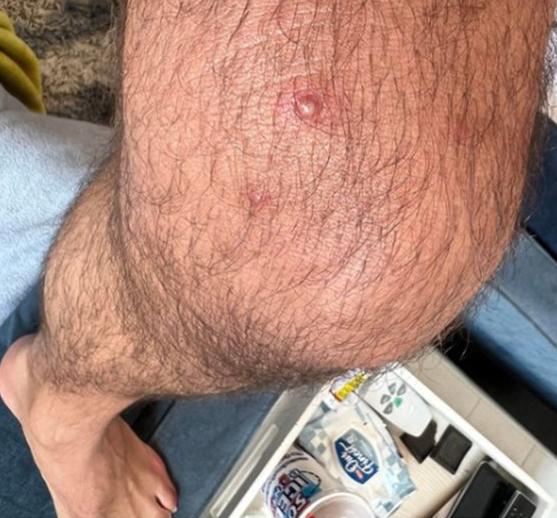
Mpox is primarily caused by close contact with an infected person or animal. While skin-to-skin contact is a major transmission route, the virus also spreads through several other methods. There is currently no cure for mpox, but there is a vaccine which costs several thousand baht for a full dose. African fire-footed rope squirrels are natural reservoirs of the mpox virus.
Avian influenza, which is currently still spreading globally, has a rare human-to-human transmission route; most infections originate from sick poultry. In the United States, there were cases of cattle to human transmission of the highly pathogenic avian influenza A (H5N1) linked to infected dairy cattle. A vaccine specifically for avian influenza will be developed.
Dr Pawinee Doung-ngern, deputy director of the Epidemiology Division, Department of Disease Control, Ministry of Public Health, explained that re-emerging diseases are considered a type of emerging disease. However, they occur, disappear for a long time, and then, reappear. Re-emerging diseases are diseases that the population already has some immunity to.
Dr Pawinee confirms that Thailand has a strong healthcare infrastructure.
The three principles of the emerging diseases response framework include Prevent (providing public information); Detect (conducting animal and environmental surveillance); and Respond (utilising surveillance, rapid response teams and public health volunteers).
Disease surveillance integrates environmental monitoring across land, water and air. Officials also monitor posts on social media to update situations. For Ebola virus, travellers from or through the designated risk areas are required to undergo quarantine for at least 21 days.
To strengthen disease surveillance and screening, legislation has been updated. For example, Hantavirus has been classified as the 14th dangerous communicable disease under the Communicable Diseases Act of 2558 (2015). Additionally, during the Covid-19 pandemic, the Communicable Disease Control Unit was expanded from 1,000 to 3,000 units to enhance rapid response and surveillance networks.
All speakers agreed that to protect humans and animals from zoonotic diseases, there should be a "One Health Approach", which means that the health of humans, animals, plants and ecosystems are interconnected; nothing exists in isolation. Thus, controlling just one thing will not prevent the occurrence of diseases.
"Everyone can be part of disease control and prevention. For example, if we see a rabid dog running around, we should immediately report it to public health officials. As consumers, we have the right to influence the direction of domestic meat production," said Asst Prof Dr Waraphon.
Dr Pawinee added: "Sharing infodemic knowledge can cause panic. If you see news suspected to be false or misleading, you should verify it by checking with reliable sources or with the Department of Disease Control hotline at 1422."