Smart showers absolutely save water and energy, but the real-world return on investment depends heavily on user behavior and the specific technology you choose. While traditional low-flow showerheads restrict water flow mechanically, smart systems use real-time data, automated pauses, and behavioral nudges to eliminate hidden waste.
Showering accounts for roughly 20% of household water use in the US, making water heating one of the largest expenses in a residential energy budget. Standard fixtures let gallons of heated water down the drain while you wait for the shower to warm up. Smart systems solve this by purging the cold water and pausing the flow at your target temperature until you step inside.
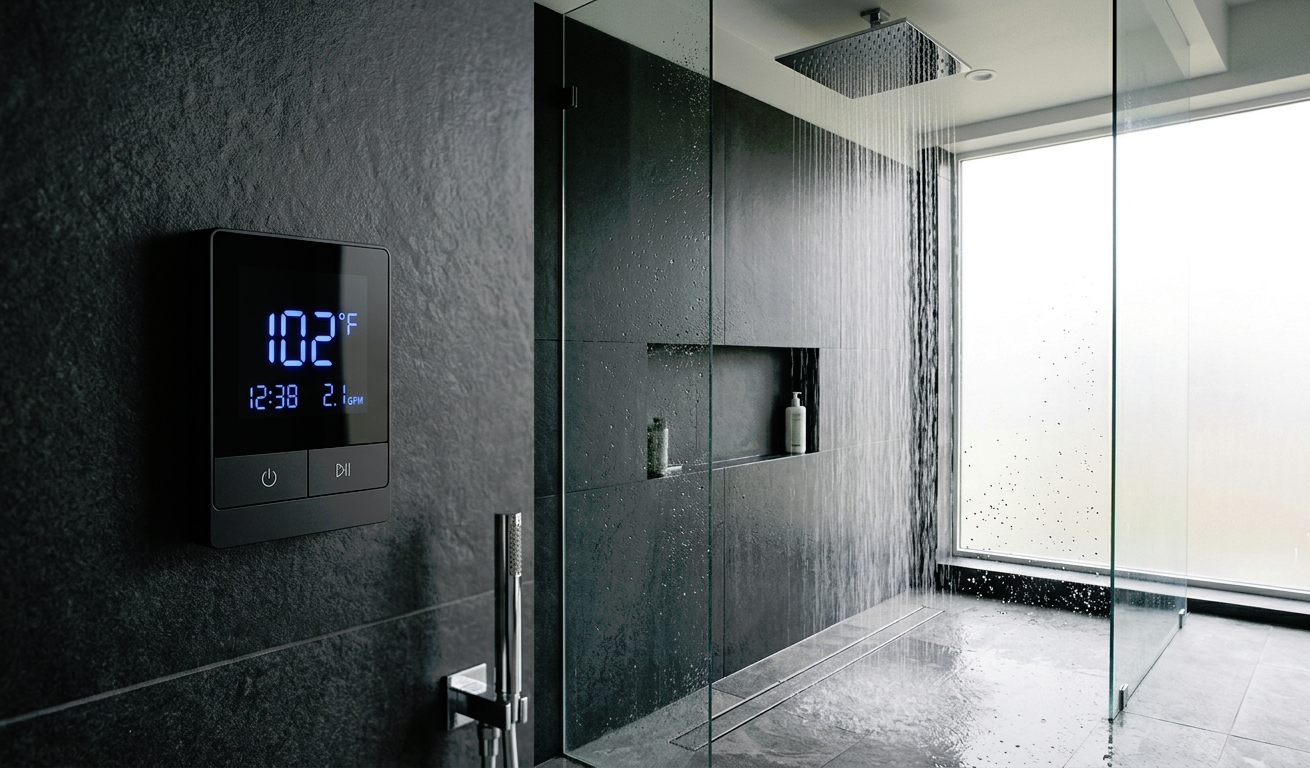
Image Source: Google Gemini
How Smart Systems Reduce Utility Bills
The primary driver of resource savings in a smart bathroom is real-time flow monitoring. When users receive immediate visual or auditory feedback about their consumption, average shower times drop by up to two minutes. This behavioral shift, combined with precision temperature control, drastically reduces both water volume and the natural gas or electricity needed to heat it.
Upgrading your bathroom infrastructure offers a reliable way to lower baseline resource consumption. If you are planning a complete remodel, choosing expert installation from Five Star Bath Solutions ensures your new fixtures maximize efficiency without sacrificing water pressure. Modern smart valves maintain a consistent temperature even when other appliances run, preventing the sudden temperature drops that cause people to waste water adjusting the handles.
Municipalities are actively encouraging these upgrades to ease pressure on local infrastructure. For example, some regions have shifted incentive frameworks to include smart home water monitors and high-efficiency plumbing retrofits in their residential utility programs.
Comparing Smart Tech to Standard Low-Flow Fixtures
Standard low-flow fixtures are inexpensive and reliably reduce flow rates to 1.8 gallons per minute or less. However, they cannot prevent behavioral waste that contributes to the world’s water problems, such as leaving the water running while lathering or waiting for the temperature to stabilize.
Smart showers offer advanced management features that traditional hardware cannot match. Incorporating digital controls into your bathroom setup introduces several distinct advantages for resource management.
Smart systems optimize daily utility usage through specific automated functions:
- Digital timers limit water flow automatically after a preset duration
- Proximity sensors reduce the flow rate to a trickle when you step back to shampoo
- Integrated applications track consumption history to highlight household utility trends
For those seeking the absolute limit of efficiency, circular smart showers represent the cutting edge. Certain advanced systems filter and recirculate water during the shower cycle, which cuts water consumption by up to 90% and energy use by 80% because the system only needs to reheat already-warm water.
Balancing Financial Payback and Data Privacy
The financial payback period for a standard smart shower valve typically ranges from three to five years, depending on local utility rates and household size. To offset the initial hardware costs, homeowners should check for local energy initiatives. Many major utility providers offer instant credits and rebates for WaterSense certified plumbing installations to drive residential resource efficiency.
Data privacy is a growing consideration since these systems connect to home automation networks. Because smart showers track usage patterns and connect to Wi-Fi, users must secure their home networks and review manufacturer data-sharing policies to prevent insights into daily household schedules from being shared externally.
Optimizing Household Resource Management
Maximizing the efficiency of a bathroom upgrade requires a comprehensive review of the entire hot water delivery system. Combining a digital shower valve with a smart hybrid water heater yields the highest energy savings. For more tips on living an eco-friendly life, and coverage of all other modern talking points that matter, stay tuned to our site.