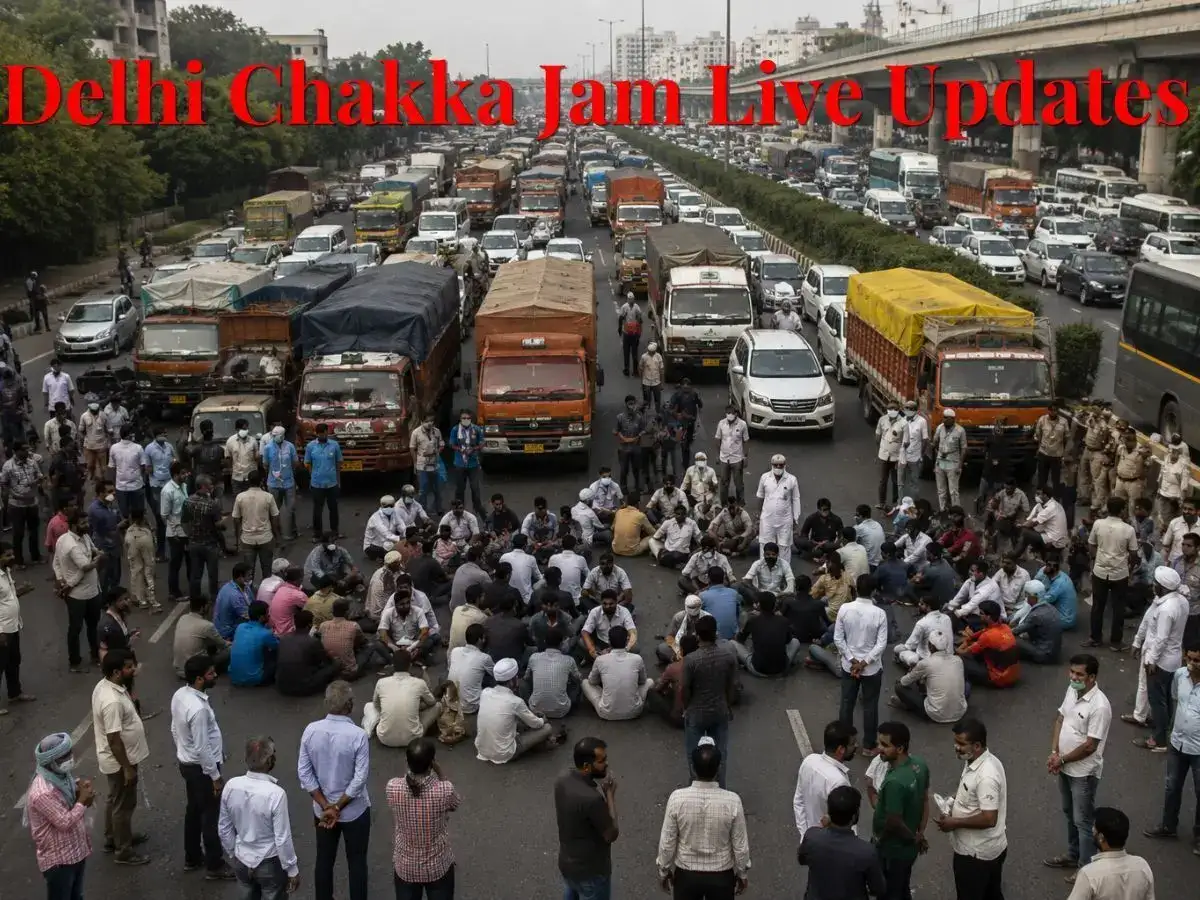
Commercial vehicle drivers’ unions across Delhi-NCR began a three-day strike on Thursday, triggering concerns over traffic congestion, slower goods movement and possible disruption to transport-linked services in several parts of the National Capital Region. The protest, scheduled from May 21 to 23, has been called by the All India Motor Transport Congress and is being supported by the Chaalak Shakti Union.
While several auto and taxi unions have distanced themselves from the agitation and said normal services will continue, transporters backing the strike have warned of larger protests if their demands are ignored.
Delhi Chakka Jam News: Why drivers are protesting
The protesting unions say rising fuel prices have made it increasingly difficult for commercial drivers to manage daily expenses and support their families.
“Due to the continuously increasing prices of CNG, petrol and diesel, middle-class drivers are struggling to support their families. Therefore, in coordination with other organisations of Delhi, the 'Chaalak Shakti Union' has called for a Chakka Jam (strike) and appealed not to operate vehicles on May 21, 22 and 23,” said Anuj Kumar Rathore.
The unions are demanding an immediate revision of taxi and auto fares in Delhi-NCR. According to them, fares have remained unchanged for nearly 15 years despite steep increases in CNG, petrol and diesel prices.
In a letter addressed to Delhi lieutenant governor Taranjit Singh Sandhu and chief minister Rekha Gupta, transport bodies alleged that commercial drivers were facing “economic exploitation” and unfair treatment.
The unions also accused app-based cab operators of acting arbitrarily and creating “slavery-like conditions” for drivers.
“If the government does not immediately increase taxi fares and issue a notification within one or two weeks, this movement will be intensified into a large-scale protest, for which the Delhi government solely would be responsible,” the union said.
Chakka Jam in Delhi Update: Which areas could see impact?
The impact of the strike may vary across Delhi-NCR, but transport-heavy routes and commercial zones are expected to remain under pressure during the three-day period.
Delhi: Several border entry points and wholesale market areas could witness congestion due to reduced commercial vehicle movement. Areas around Azadpur Mandi, Okhla, Narela, Ghazipur and major transport hubs may experience slower loading and unloading activity.
Traffic movement near ISBTs, railway stations and industrial belts could also remain affected during peak hours.
Noida and Greater Noida: Industrial sectors, warehouse zones and logistics parks in Noida and Greater Noida may face delays in supply movement. Delivery trucks carrying groceries, electronics, FMCG goods and construction materials could operate at reduced capacity.
Some office commuters may also experience longer wait times for autos and taxis in busy sectors.
Gurugram: Corporate hubs and commercial areas in Gurugram may witness slower cab availability in certain pockets if participation in the strike increases over the next two days.
Movement of goods around Manesar and industrial corridors may also slow, affecting factories, warehouses and local suppliers.
Ghaziabad and Faridabad: Transport-heavy routes in Ghaziabad and Faridabad could witness congestion due to truck queues and road blockades in selected areas.
Construction supply chains, local wholesale businesses and industrial operations may experience temporary disruption if truck movement remains restricted.
Online deliveries and wholesale markets may slow down
Consumers across NCR could notice delays in large e-commerce deliveries, furniture shipments and wholesale restocking during the strike period.
Fresh vegetables, fruits and dairy products arriving from neighbouring states may also reach local markets later than usual if transport movement remains affected on highways and city borders.
Small traders and retail shops dependent on daily supply chains may face temporary pressure over the next three days.
Several unions distance themselves from strike
Despite the protest call, not all transport unions are participating. The Delhi Auto Rickshaw Sangh clarified that auto and taxi services would continue normally and said the protest was mainly linked to transporters opposing increased environmental compensation cess on commercial vehicles.
“The issues concerning goods carrier vehicles have been ongoing for the past 15 to 20 days and have no connection with auto and taxi drivers. Auto and taxi services will continue to operate normally at all railway stations, bus terminals and other locations as usual,” said Rajendra Soni.
He added that multiple unions, including Delhi Pradesh Taxi Union, Auto Drivers Welfare Sangh Delhi, Pragatisheel Autorickshaw Drivers Union and National Capital Region Auto Taxi Transport Union, had stayed away from the strike and road blockade.
The Delhi Taxi and Tourist Transport Association also refused to join the agitation.
“The association believes that the country is currently facing serious challenges due to rising international oil and gas prices. At such a time, it is important to cooperate in the national interest rather than inconvenience the general public,” said Sanjay Samrat.