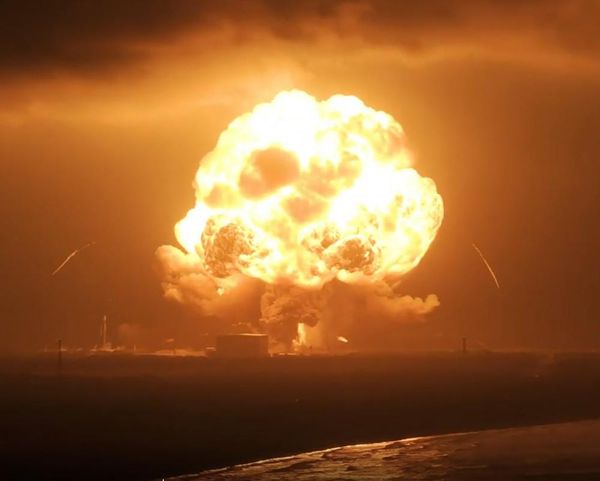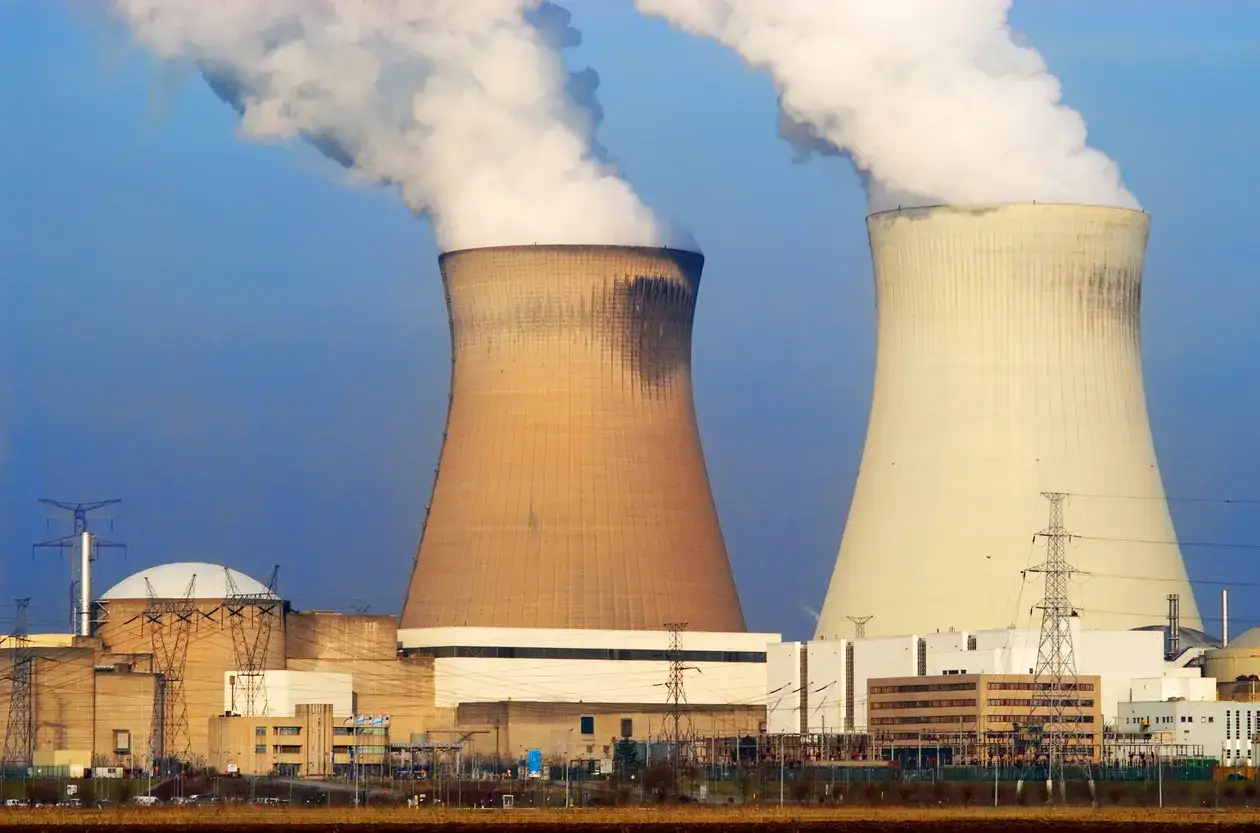
Cancellation of NuScale Power Corporation's Carbon Free Power Project (CFPP) in Idaho in the US in 2023 is cited by critics as evidence that the market has rendered its verdict on the commercial viability of small modular reactors (SMRs). They argue that SMRs and micro modular reactors (MMRs) are expensive to build on a per-MW basis, particularly compared with rapidly falling RE costs. In India, for example, levelised cost of energy (LCOE) from solar power has fallen below ₹2 a unit, further strengthening the economic case against SMRs.
If the question is which tech produces the cheapest kWh, nuclear power critics have data on their side. But this isn't the right question.
Take an AAA battery. It costs about ₹20 and stores 1.8 Wh of energy, implying a cost of roughly ₹11,000 per kWh, an order of magnitude higher than grid electricity. By LCOE logic, the battery should be an economic absurdity. Yet, billions are used every year. The reason: value depends not just on the cost of energy, but on whether it delivers the right energy, at the right place, at the right time, with the required reliability.
Economics of any energy technology cannot be separated from the demand it's designed to serve. India needs to integrate rapidly-growing RE capacity while maintaining grid stability, supplying industrial process heat, and ensuring firm power availability for baseload demand that does not respond to weather patterns.
The largest challenge in RE-heavy grid is non-solar hours. No plant or factory can run on variable power. None of these needs can be served by batteries at any plausible cost trajectory. Coal, which fills this gap, carries carbon liabilities and fuel-import costs that do not appear in the solar LCOE table. LCOE analysis omits 3 factors when used against nuclear power:
Capacity value premium: Grid operators pay for firm, dispatchable generation that is available on demand rather than only when the sun shines.
System integration costs: Firming, storage and transmission infra required as RE penetration rises.
Process heat substitution value: SMRs and MMRs can supply high-temperature industrial heat that no RE tech can currently provide at scale. The economics of cogeneration substantially alter the cost picture.
Teri's analysis shows that India's indigenous pressurised heavy-water reactor (PHWR) programme delivers nuclear power at about $47.64/MWh, the second-lowest nuclear generation cost globally. That's before a single industrial heat credit is applied.
The learning-curve argument is the most important point critics omit. SMRs are being evaluated at first-of-a-kind cost, the highest point on any tech's cost trajectory. The relevant question is not what the first unit costs, but what the 50th unit costs after serial factory fabrication is established, supply chains mature and regulatory processes are standardised for repeat deployment.
India's institutional depth in this area is not hypothetical. In April, the 500 MWe Indira Gandhi Centre for Atomic Research-developed prototype fast-breeder reactor (PFBR) at Kalpakkam, Tamil Nadu, achieved first criticality, making India only the second country after Russia to operate a commercial-scale FBR.
Budget 2025-26 allocated ₹20,000 cr under Nuclear Energy Mission, targeting 5 indigenous SMRs by 2033, including BSMR-200 and SMR-55, both slated for Tarapur. Private engineering talent is also moving in the same direction.
Pune-based IYNS TechSolutions is developing SUK-M (Sookshma), a 10 MWe/30 MWth molten-salt microreactor, fuelled by thorium with a refuelling cycle exceeding 15 yrs. It remains a design-stage venture rather than a commissioned plant, but its existence signals something significant: Indian engineers are not waiting for foreign blueprints.
Intellectual honesty requires acknowledging constraints. Advanced SMRs rely on high-assay low-enriched uranium, which is not yet commercially produced domestically. Meanwhile, SHANTI (Sustainable Harnessing and Advancement of Nuclear Energy for Transforming India) Act's subordinate rules remain pending, and Atomic Energy Regulatory Board's framework was designed for large centralised reactors, not factory-built modular units.
Reaching 100 GW will require annual additions of roughly 4.5 GW from the early-2030s onward, a pace unprecedented in India's nuclear sector. These are genuine execution challenges. The crucial distinction is between constraints intrinsic to the tech and those created by policy, financing and regulation. Critics often blur this line. The former may justify abandonment; the latter demands investment.
The task before India is not to choose between nuclear and RE. It's to stop pretending that a partial cost metric constitutes an economic argument. NITI Aayog and power ministry should commission a full system-cost study that captures capacity value, industrial heat substitution, fuel-security premiums and grid-integration costs, alongside generation LCOE. Until then, the debate will continue to produce more heat than light.