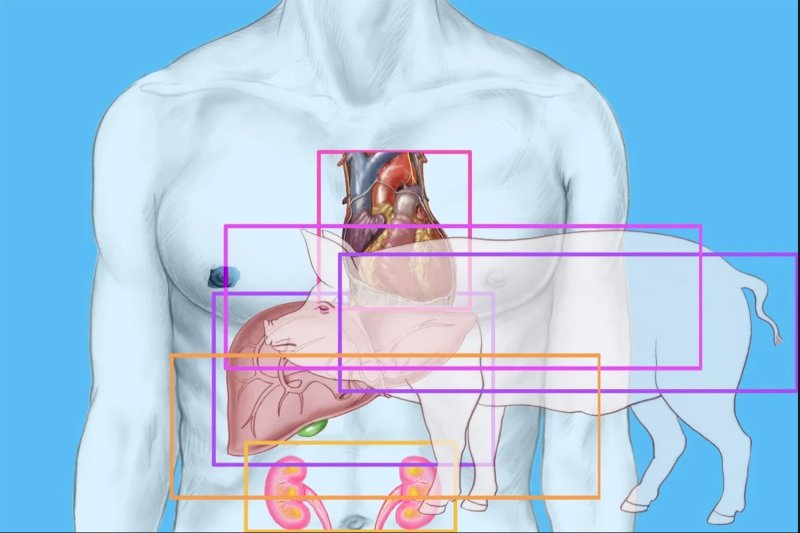
HONG KONG — A Chinese team has transplanted a pig's kidneys and liver into a patient who had suffered brain death, a world first which may pave the way for multi-organ animal-to-human transplants.
After the operation, the organs functioned within the 53-year-old man for nearly five days before the study was ended per his family's wishes.
Xenotransplantation, or the transplant of organs or tissues from one species to another, could help tackle global organ shortages that leave patients in limbo or worse.
"This study provides initial evidence for the feasibility of pig-to-human orthotopic whole liver plus bilateral kidney transplantation," the team said in a paper published in the peer-reviewed journal Med on May 29.
Orthotopic transplant means the placement of the organs in the correct anatomical position within the body after the old organs are removed.
The team, led by researchers from the Second Affiliated Hospital of Guangxi Medical University, said their study also identified early immune and metabolic features that could inform future clinical practice.
While monkeys are often used in scientific research to model humans, pigs are preferred for xenotransplantation due to their humanlike organ size and metabolism and lower risk of cross-species disease transmission.
Despite the potential of animal-to-human xenotransplantation, scientists and doctors still face many barriers before it can become a clinical practice, including the risk of disease and organ rejection.
In 2024, several milestones in xenotransplantation were achieved by researchers in the United States and China, including the first transplant of a pig liver into a brain-dead patient and the first transplants of a pig liver and kidney into different living human patients.
Thus far, pig-to-human xenotransplants have mostly been done with single organs, as transplanting multiple organs is more complex and can increase the risk of rejection.
"Multi-organ transplantation involving the liver represents the definitive treatment for patients with simultaneous end-stage failure of multiple vital organs," the team wrote.
In the study, the whole pig liver had three genes removed to reduce the risk of rejection and three human genes added to reduce the risk of blood clotting.
The brain-dead patient had severe kidney disease before the transplant but had a healthy liver, which was transplanted into a living patient before the study was conducted.
Following the xenotransplant, the organs had a normal blood supply for five days and the liver released bile.
The patient's baseline levels of the waste products creatinine and urea were high before the transplant due to his kidney disease, and these levels returned to normal following the transplant.
The team also found that after the transplant, the pig liver began shifting its behaviour to more closely resemble a human liver.
The team said that further studies into multiorgan xenotransplants were needed and that they plan to conduct subsequent trials in brain-dead patients.
"Overall, we provide initial human evidence supporting multi-organ feasibility and establish a framework for evaluating its generalisability," the team wrote.