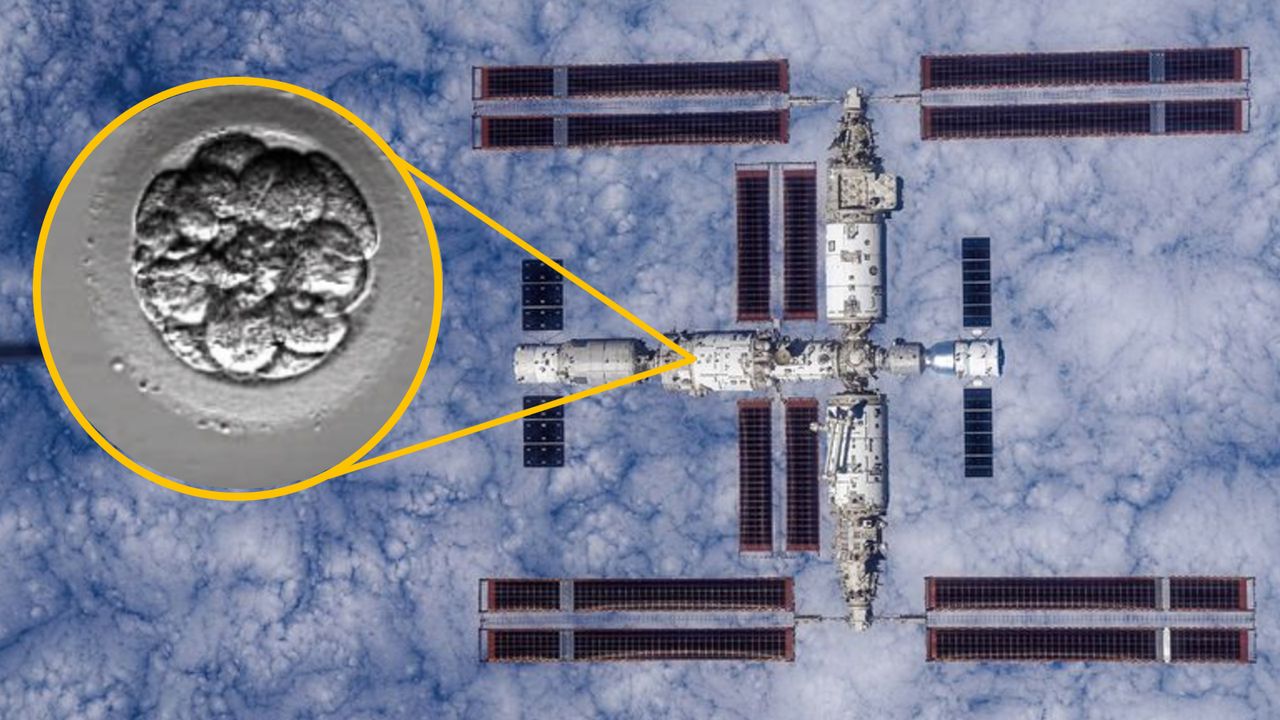
China has become the first nation to send "human artificial embryos" to space in a bid to better understand how microgravity and cosmic radiation may affect human reproduction. The results could have big implications for our ability to set up self-sustaining colonies on the moon and Mars.
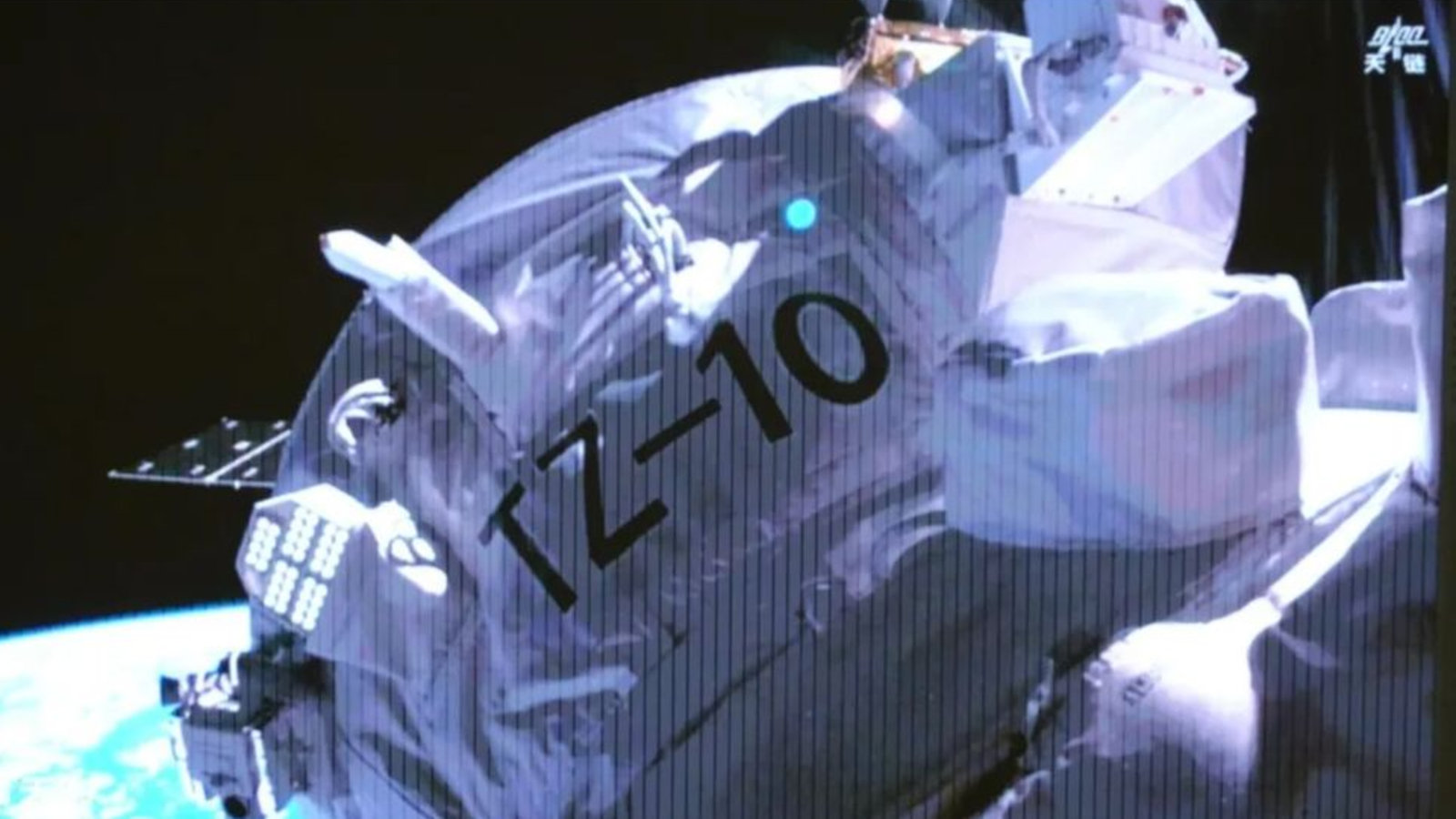
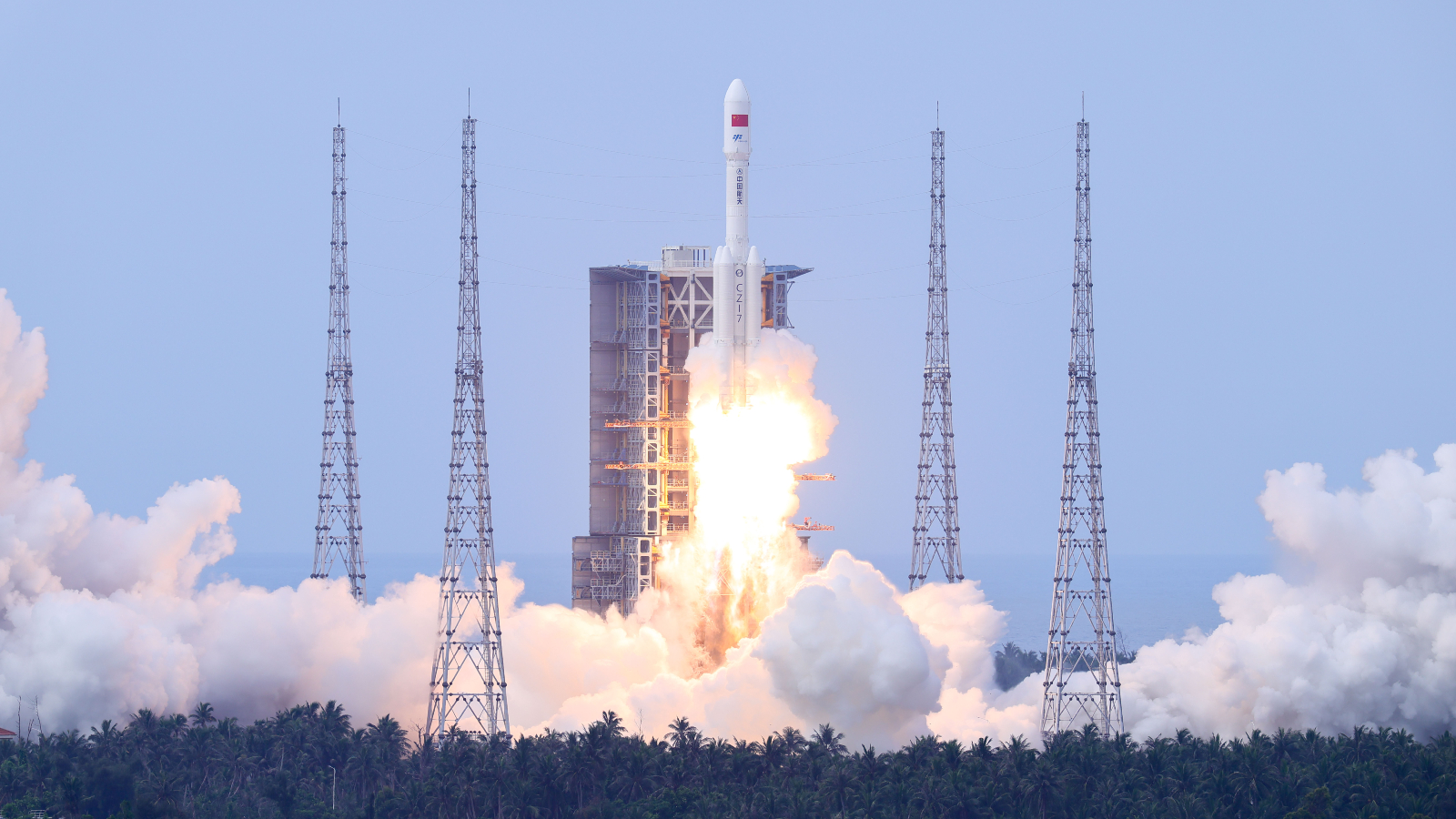
The embryo-like structures, made from living human stem cells, arrived on the Tiangong ( "Heavenly Palace") space station in the early hours of May 11 as part of the Tianzhou-10 resupply mission, state officials revealed. The mission also delivered around 7 tons (6.3 metric tons) of cargo — including food, fuel, spacesuits and other scientific experiments — to the Chinese astronauts currently living on the station.
The Tianzhou-10 spacecraft, which is similar to the cargo ships that deliver supplies to the International Space Station (ISS), lifted off from Wenchang Space Launch Site around five hours earlier, at 8:14 p.m. EDT on May 10, Live Science's sister site Space.com reported.
Stem cells in orbit
The artificial embryos are made from collections of stem cells that can divide and multiply like a normal embryo but are unable to properly develop into a fetus or baby, allowing researchers to carry out their work with fewer ethical concerns.
"This is not a real human embryo and does not have the ability to develop into an individual," Leqian Yu, a researcher at the Chinese Academy of Sciences' (CAS) Institute of Zoology who is leading the experiment, said May 14 in a CAS statement. "However, it can serve as a model for studying early human development."
Two types of artificial embryos, representing different phases of embryonic development between 14 and 21 days after fertilization, were used in the experiment. The first is a peri-implantation model, which mimics the critical phase where an embryo attaches itself to the uterine wall. The second is a peri-gastrulation model, which replicates the point in early development when a single layer of cells reorganizes into distinct layers that will eventually form different tissues and organs.
The embryos will be allowed to grow for five days before they are frozen and later returned to Earth for analysis. "The experiment is going very well," Yu said in the statement. (By now, the embryos have likely already been put on ice.)
As the embryos were developing in space, researchers in China grew and froze identical artificial embryos, which will serve as the control group for the experiment. "We hope that by comparing the development of space and ground samples, we can identify the factors affecting early human embryonic growth in the space environment, and address the risks and challenges humans may face during long-term space habitation," Yu said.
Similar experiments involving zebrafish embryos and mouse embryos were also launched on board Tianzhou-10.
Making babies in space
The ability to reproduce in space will be crucial if humanity is to establish a permanent presence on the moon, Mars and other more distant worlds. However, several issues need to be overcome before this can happen, if it is even possible at all.
Experts have warned that as space tourism becomes more mainstream, non-astronauts will likely start having sex in space, which could lead to babies being conceived off-world.
Previous research has hinted that the high levels of radiation in space could damage developing embryos, while microgravity is also expected to be a major stumbling block.
Yu told state-run media that the artificial embryos "were brought to space to explore whether life, which has evolved under gravity for hundreds of millions of years, is affected by its sudden absence."
Studying the very early stages of embryonic development will be particularly important for determining the feasibility of natural reproduction under these conditions. It is "a critical window in early human development, during which the building blocks for future organs begin to form, and the entire body axis — which determines the head and the tail — is established," Yu told state-run media outlets.
RELATED STORIES
- Chinese astronauts are back on Earth after suspected 'space junk' strike left them stranded in space
- Unknown strain of bacteria found on China's Tiangong space station
- Chinese astronauts make rocket fuel and oxygen in space using 1st-of-its-kind 'artificial photosynthesis'
A recent study also revealed that microgravity could disorient sperm cells, making it much less likely for egg fertilization to occur. And it's been known for a while that stem cells age much faster in space than they do on Earth, which could also be a serious issue.
Given these challenges, it may be necessary to turn to in vitro fertilization to help grow babies in space, which is an idea already being explored by several private space exploration companies.