The European Union has launched a major initiative aimed at strengthening its domestic technology industry and reducing reliance on foreign suppliers, placing cloud infrastructure, artificial intelligence, semiconductors and open-source technologies at the center of its latest industrial strategy.
The package comes at a time when technology has become increasingly tied to national security, trade policy and geopolitical competition. European policymakers have intensified efforts to secure critical digital infrastructure following Russia's war in Ukraine, rising tensions between China and the West, and growing concerns about access to technologies controlled by a handful of foreign companies.
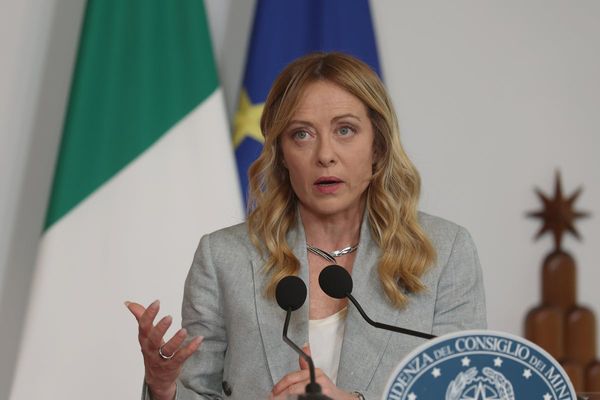
European Commission Executive Vice President Henna Virkkunen stressed the strategic importance of technological development. "We live in a world where geopolitics and technology are inseparable. Those who champion technological innovation will shape the future, and we must ensure that Europe plays a leading role in this," she said, according to Euronews.
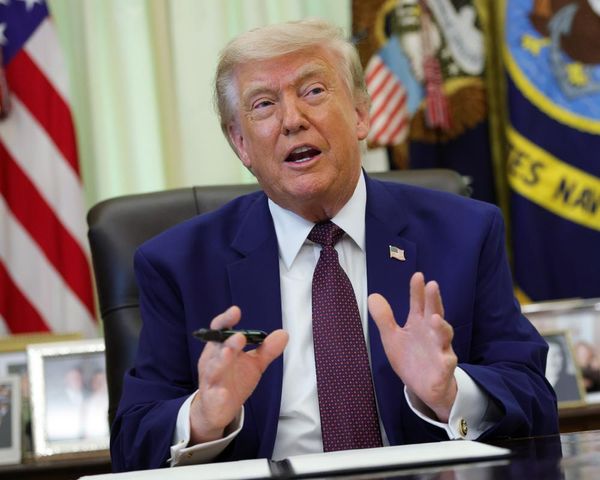
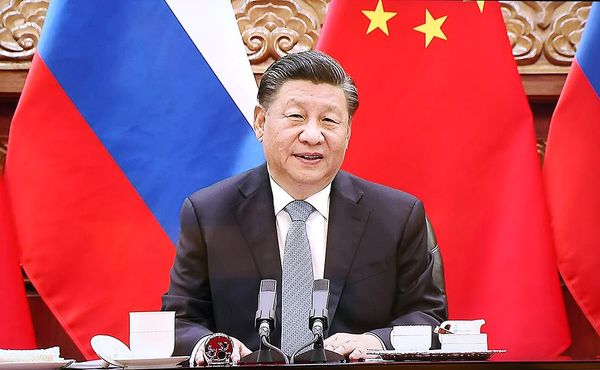
The proposal is designed to expand European technology capabilities while reducing dependencies on companies based in the United States and China. The European Union currently imports much of its digital infrastructure and technology services, while major segments of the market are dominated by American and Chinese firms.
One of the main pillars of the package focuses on cloud computing, where Amazon, Microsoft and Google collectively account for about 80% of the European market. European providers remain significantly smaller players despite years of efforts to build domestic alternatives.
Under the proposal, public authorities would be required to consider different levels of digital sovereignty when purchasing cloud services. The highest classification, covering sectors such as defense and healthcare, would effectively restrict certain contracts to European providers. European officials have cited concerns that critical services could become vulnerable if access to foreign-controlled infrastructure were disrupted during periods of political tension.
German lawmaker Axel Voss welcomed the Commission's approach, calling it a practical step toward strengthening Europe's digital capabilities. "Building genuine European cloud and AI sovereignty is overdue, and giving our providers a fair seat at the table in strategic public tenders is the right instinct," Voss said, according to the report.
The initiative also places renewed emphasis on semiconductors, which have become a strategic priority for governments around the world since supply-chain disruptions during the COVID-19 pandemic exposed vulnerabilities across multiple industries. Rather than focusing primarily on subsidies to attract manufacturers, the European Commission is now seeking to stimulate demand for European-made chips.
The move comes as major economies continue investing heavily in semiconductor production. The United States has expanded support for domestic chip manufacturing through the CHIPS and Science Act, while China continues to pour resources into its semiconductor industry despite export restrictions from Washington. Governments worldwide have increased efforts to secure chip supply chains amid intensifying competition for advanced technologies, according to Reuters.
Artificial intelligence is another key focus of the package. The proposal is expected to support European AI developers, including French startup Mistral AI, which has emerged as one of the continent's leading artificial intelligence companies, according to Euronews.
European lawmakers have acknowledged that regulations alone will not close the technology gap. Matthias Ecke, a German member of the European Parliament, argued that Europe must strengthen its industrial base alongside its regulatory framework. "Europe cannot regulate its way out of technological dependency," Ecke said, according to Euronews. "It must build its own capacity, overcoming one-sided dependencies and restoring a genuine choice for businesses and consumers alike."
The push comes as Europe continues to face challenges in expanding data-center capacity needed to support AI development. High energy costs, slow permitting processes and limited availability of suitable sites have slowed construction across parts of the continent. Europe remains behind the United States in the scale of AI-related infrastructure investment, according to reporting by Financial Times.
Concerns about technological dependence have gained momentum in Brussels in recent years. The debate over digital sovereignty intensified during the first Trump administration and has continued as governments increasingly view access to technology and digital services as strategic leverage. European officials have pointed to examples in which sanctions and geopolitical disputes affected access to essential services provided by foreign companies.
Despite efforts to increase self-reliance, European policymakers have acknowledged that complete technological independence is unrealistic. The bloc remains dependent on foreign suppliers for many advanced technologies and continues to participate in international partnerships designed to secure critical supply chains.
Europe nonetheless retains influence in important segments of the global technology industry. Dutch company ASML remains a critical supplier to semiconductor manufacturers worldwide through its near-monopoly on advanced lithography machines used to produce cutting-edge chips. The company occupies a key position in the global semiconductor ecosystem, according to Bloomberg.
The Commission's package also promotes the use of open-source technologies and broader reforms aimed at improving access to financing for startups. Officials hope those efforts will help address long-standing concerns about Europe's fragmented technology market and difficulties scaling companies across the bloc.
"The target is to achieve something visible by 2030," Virkkunen said, according to the Euronews report. "Eighty percent of technology is coming from outside Europe. We will not change that overnight."