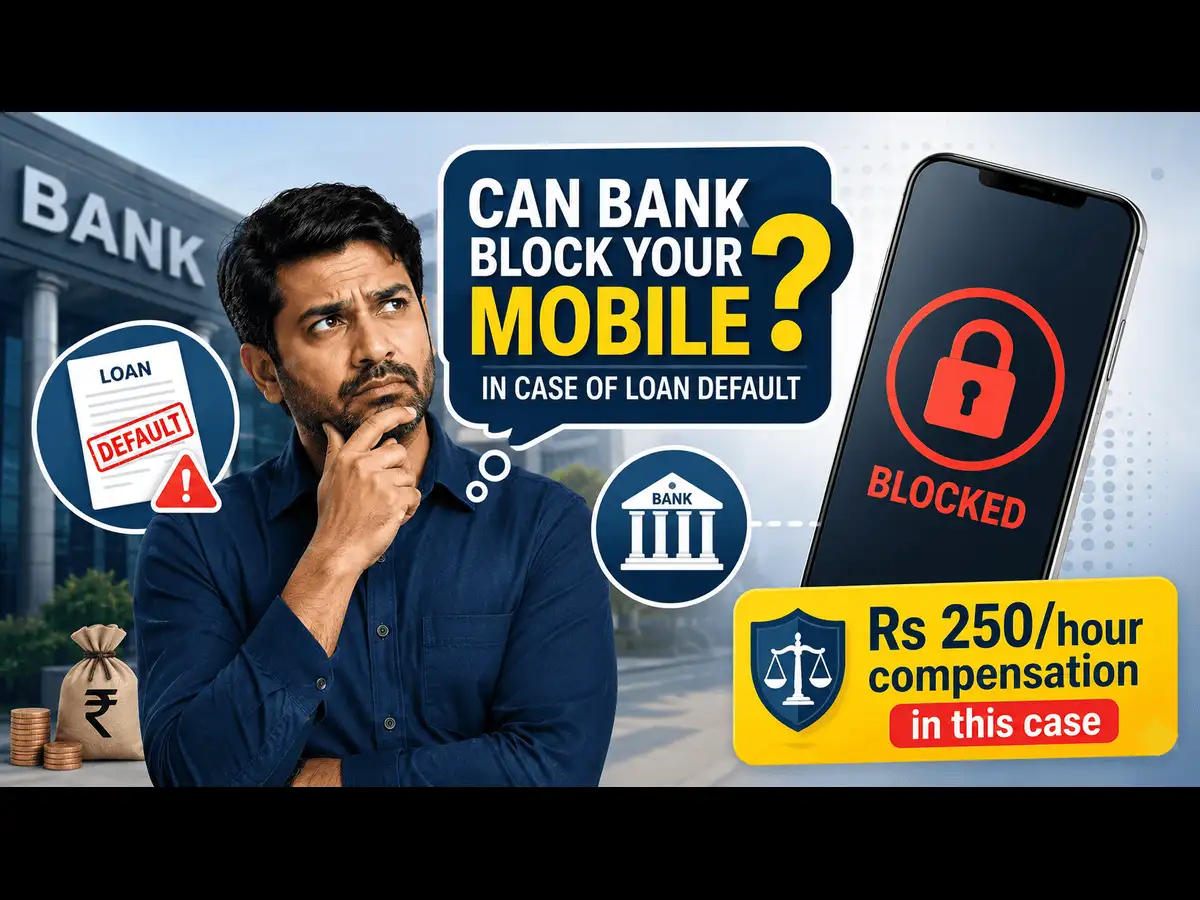
Took a loan for the latest iPhone model but didn’t repay it on time? There might be some good news for you as banks won’t be able to block the device but they might disable some functions on your financed devices to recover the loan dues. The provision is part of the larger loan recovery guidelines issued by the Reserve Bank of India (RBI) on Wednesday.
The central bank has proposed that banks cannot disable or restrict the mobile phones of defaulting borrowers to recover loans, as part of efforts to curb aggressive recovery practices. With this, the RBI has also proposed stricter guidelines for recovery agents, bank employees, prohibiting the use of abusive language, among others.
Starting October 1, 2026, banks will not be allowed to deploy any technology-based mechanism which restricts or disables any of the functionalities of a mobile device of a borrower like their mobile phone, tablet, etc., as a recovery tool, except to recover its loan dues arising out from financing of such a device, Reserve Bank has said.
RBI’s loan recovery guidelines: Can banks block your mobile phones?
As part of the revised draft, banks will not be allowed to block the financed devices, but they can restrict certain functionalities of a mobile device provided the following conditions are satisfied:
- The acquisition of the device is financed by the bank through a loan
- The loan agreement expressly and unambiguously permits such an action
- A notice is issued to the borrower after the loan becomes 60 days past due, with at least 21 days of time being provided to the borrower to cure the default
- Another notice has been given to the borrower after the expiry of the notice with at least another 7 days of time being provided to cure the default.
Worth noting here is that the bank can’t deploy mechanism to restrict or disable the functionalities of the device until the associated loan has become 90 days past due and the borrower has not cured the default despite being served notices. Moreover, banks can neither access or use, nor obtain or retain the data stored in the mobile device of a borrower for the purpose of loan recovery or any other purpose.
Key things borrowers must note about when banks can disable certain functionalities on their mobile:
| Restrict/disable phone functionalities only after associated loan has become 90 days past due | Following a notice after the loan becomes 60 days past due, with at least 21 days of time |
| Another notice after the expiry of the notice with at least another 7 days of time to cure the default | Loan agreement clearly and unambiguously permits such an action |
Banks disabling mobile functionality for loan recovery: What borrowers must know
If the lender bank decides to deploy any technology-based mechanism for restricting or disabling the functionalities of a mobile device of a borrower, it shall ensure adopting a graduated approach rather than disabling the device, ab initio; it can’t disable essential services like internet access, incoming calls, emergency SOS, and receipt of emergency Government or public-safety notifications.
Further, the bank needs to make sure that the restrictions on device functionalities are reversed expeditiously, in any case within 1 hour of the borrower curing the default.
If there’s a delay by the bank in reversing mobile restrictions, even if the borrower has repaid the loan, the lender would have to compensate the user at the rate of Rs 250 per hour till the wrongful action is remedied. As soon as the loan in repaid in full, the mechanism deployed for restricting mobile functionalities shall be uninstalled.
The borrower shall have the right to prepay the loan, either partly or fully, at any stage.
Stricter rules for loan recovery, bank agents’ behaviour and conduct
Bank employee or the recovery agent, as directed by the central bank, shall not engage in any harsh methods towards loan recovery. RBI says that the following practices shall be deemed as harsh:
- Use of minatory or abusive language
- Use of social media for posting video / audio recordings or borrower’s personal details
- Sending inappropriate messages either on mobile or through social media
- Excessively calling / messaging to the borrower / guarantor and / or doing so outside the prescribed hours
- Making threatening, anonymous calls
- Intimidating or harassing the borrower, their relatives, referees, friends, or co-workers in either verbal, physical or any other manner
- Use or threat of use of violence or other similar means to harm the borrower
- Making false or misleading representations to the borrower, especially about the extent of the debt or the consequences of non-repayment
“A bank shall put in place a management structure to monitor and control the activities of its recovery agencies and ensure that they refrain from actions that could damage the bank’s integrity and reputation. The bank shall ensure that its agreement with a recovery agency contains necessary provisions for achieving the same,” RBI said.
Further, banks have been directed to put in place a management structure to monitor and control the activities of its recovery agencies and ensure that they refrain from actions that could damage the bank’s integrity and reputation.