
Details
Publisher Atari
Developer Fabraz
Release date 22 May
Format PS5 (reviewed), Nintendo Switch, Xbox Series X|S, PC (Steam)
Platform Unity
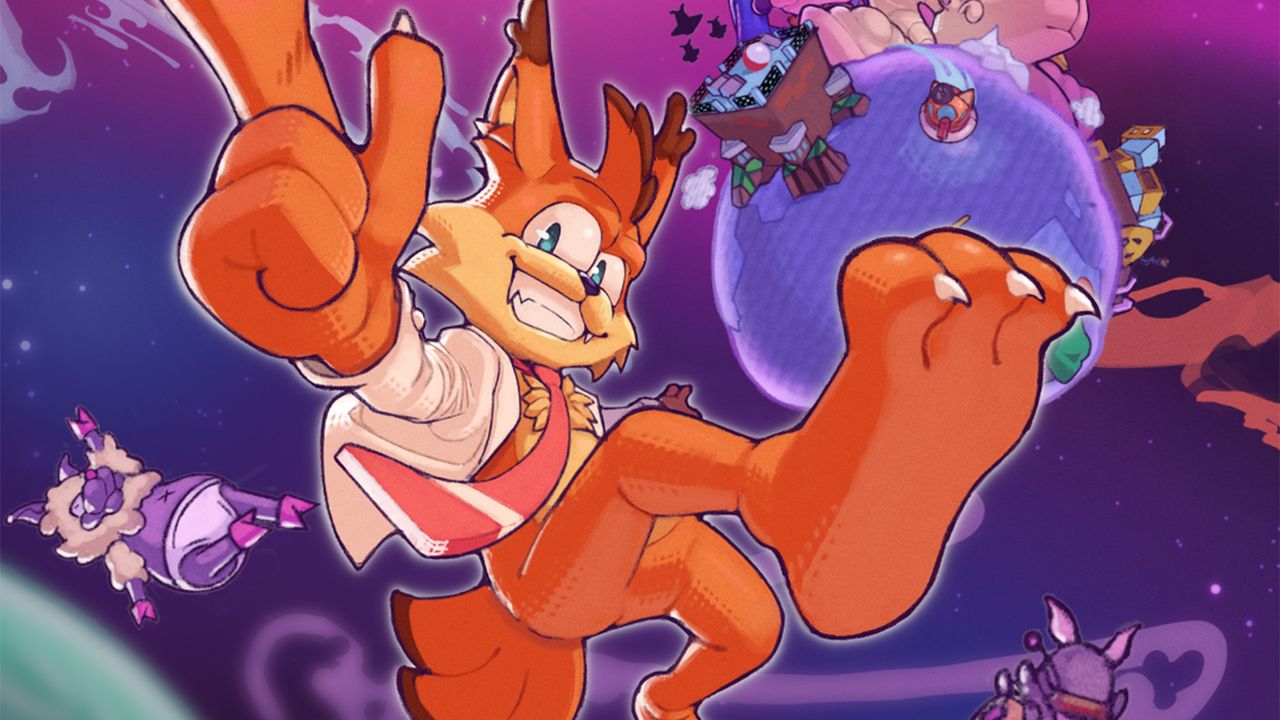
After decades of being a bit of a joke, playing a new Bubsy game in 2026 made me pinch myself because Bubsy 4D is, actually, alright – not amazing, but just okay. Atari won’t give Sega and Nintendo sleepless nights, but still, Bubsy 4D is a surprisingly neat little indie platformer that understands exactly what the original Grumpy Cat is and why dragging the bobcat back again is inherently interesting, even if the end result never truly impresses and is plagued by limitations and frustrations.
The setup is ridiculous and suitably Saturday morning cartoon in depth, as the Woolies, those weird dog-headed antagonists from the old games, and not the Michigan indie rock band, abduct Earth’s sheep, except the sheep overthrow them, steal their tech and transform into robotic BaaBots, which then return to Earth to nick Bubsy’s Golden Fleece and accidentally drag the exhausted mascot into an intergalactic crisis he clearly cannot be bothered with. Bubsy spends most of the game sounding like someone who’d rather be asleep on the sofa than saving the universe, and honestly, fair enough.
That worn-down energy is probably the game’s best idea, as this Bubsy isn’t trying to be cool anymore; he’s instead a self-aware retro gaming relic stumbling through another reboot because the industry refuses to let mascots die, muttering bad cat puns and looking permanently one inconvenience away from giving up entirely. There’s something very charming about it, particularly when one of his idle animations has him hunched over in pure fatigue with everything, which, after a few hours of collecting coloured yarn balls, started to feel too accurate.
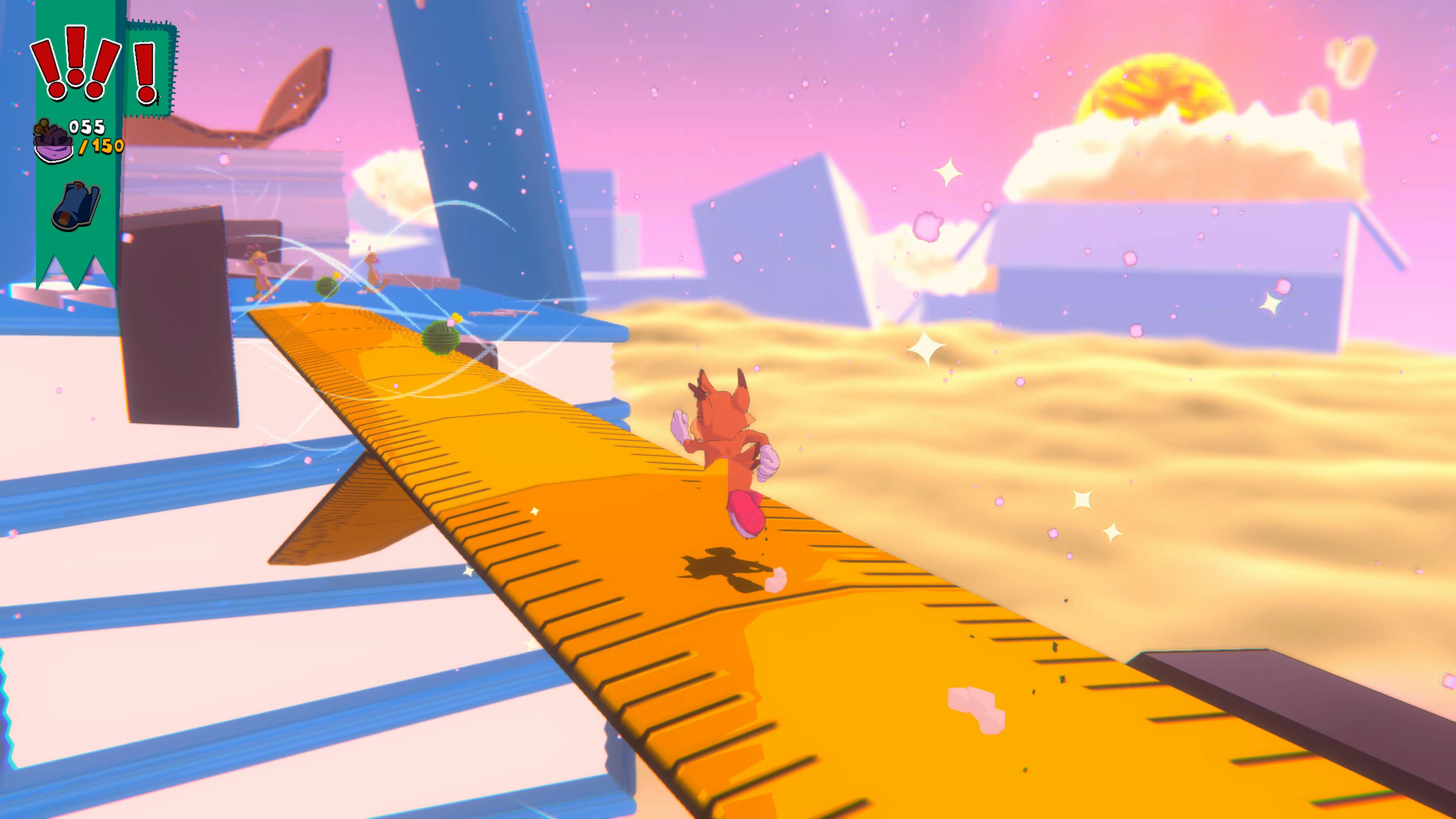
Developer Fabraz clearly gets the genre, though, as beneath the meta humour and constant jokes lies a genuinely solid set of ideas built around classic platforming, rolling, and collecting. Bubsy can curl into a furball and roll around maps, bouncing between buildings and over ramps while hoovering up collectables scattered across these compact sandbox worlds – in fact, there's more of this rolling gameplay than I expected. Some collectables unlock cosmetics, including a very cheeky Sonic-style costume with a pixelated swimsuit area, while others feed into new movement upgrades, like the ability to run off a platform slightly – Bubsy’s legs spin in midair, giving you an extra step for each jump.
Despite it relying on these well-worn ideas that in other games can be hectic affairs, here there’s a fairly casual feeling to everything that boils down to sauntering around maps, sniffing out hidden corners and weird pipes to squeeze Bubsy’s furball self into because there’s always a collectable at the end. Bubsy claws up walls, glides across gaps, pounces on enemies with exaggerated cartoon elasticity and generally throws himself around with enough energy to almost distract from the fact that you’re basically collecting more floating yarn balls again because, well… video games. Whether ironically or lazily, Bubsy is still doing what Bubsy has always done: collect stuff.
Every map starts to blur together after a while – more floating platforms and little side routes leading to yet more collectables. There are conversations with Bubsy’s extended feline family (the motley crew?) scattered around the stages, and the writing occasionally lands a decent gag, mostly when it leans into mascot game clichés and cat litter humour. Still, the jokes are pretty one-note, with plenty of puns and lots of self-awareness, which can wear thin.
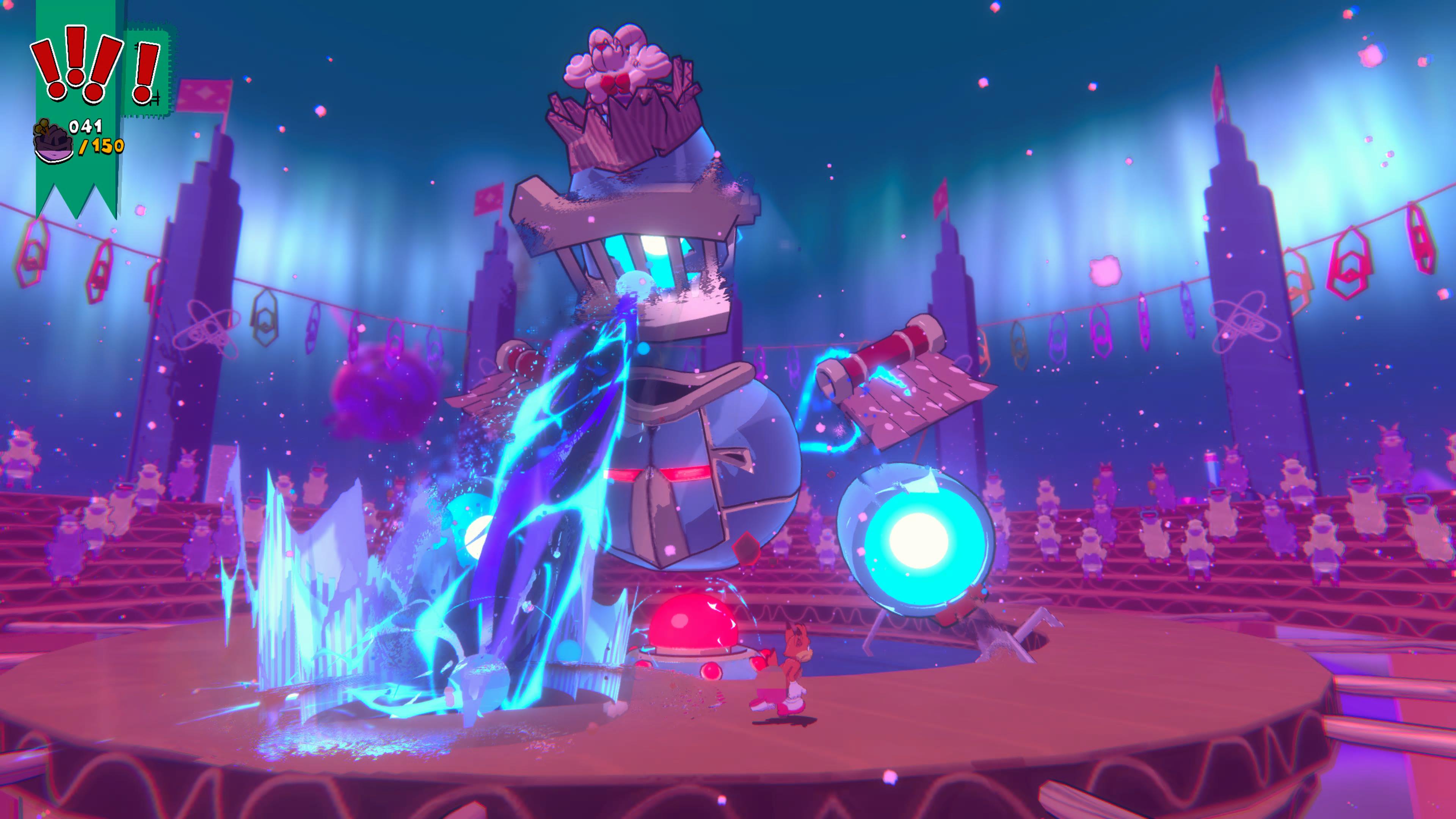
Visually, the game tries hard to keep things lively, and the worlds range from a bright arts-and-crafts theme to a thrown-away computer-parts setup, complete with a giant '80s Atari joystick, stitched fabrics, and woolly textures everywhere. Still, unlike Yoshi's Crafted World or Sackboy: A Big Adventure, which make those materials feel soft, tactile and cosy, Bubsy’s worlds are rougher, harsher and noticeably lower detail. It’s one of the moments that belie Bubsy 4D’s indie roots and are clearly a sign of a lower budget than AAA platformers, and, like Bubsy himself, a reminder that this mascot could never compete with Mario and Sonic.
It’s not that Bubsy 4D isn’t made well, Bubsy himself has some nice, elastic animation – all flailing limbs and scratchy panic – and there’s a proper squash and stretch to the way he moves, lands with a Wile E. Coyote flat-splat, that gives the platforming personality even when the environments themselves can feel quite limited and sparsely dressed. The dev does have some fun with its worlds, though, and will switch camera angles as Bubsy makes a fourth-wall-breaking quip, but it's never quite enough to lift the game.
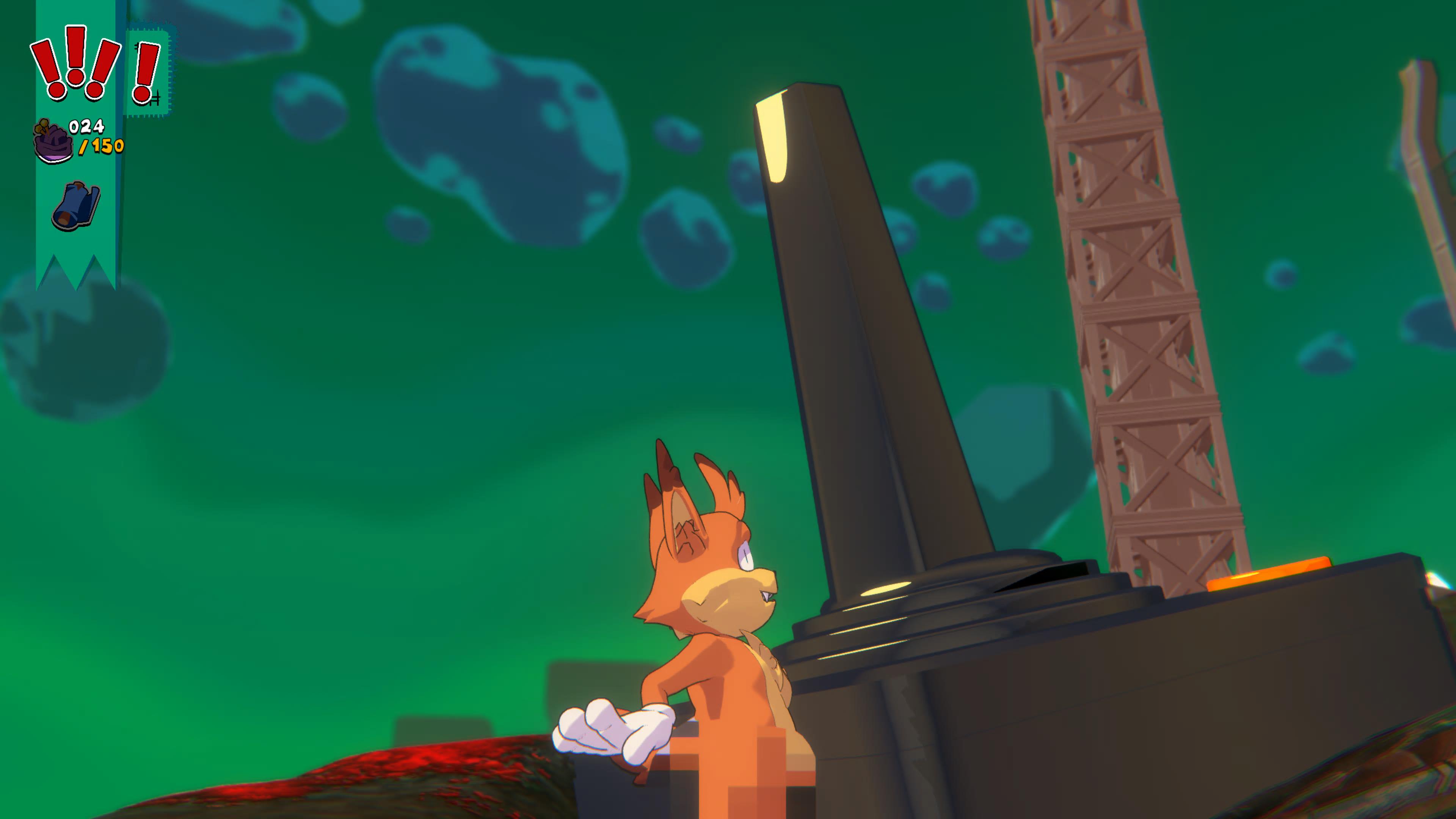
That animation can’t mask the looseness of the movement, though, and if anything, can make it more apparent, particularly during precision platforming, where Bubsy tends to fling himself vaguely in the direction you suggested rather than exactly where you intended. There’s also an awkward clash between automatic contextual actions and manual timing-based mechanics. One second, the game is magnetically snapping you onto bounce pads and catapult balls; the next, it expects careful precision while hot-swapping between furball mode, gliding, and wall climbing in quick succession. It can feel messy, particularly in later stages, where multiple mechanics and button inputs compete for your attention all at once.
Add in some frustrating restart points where Bubsy can respawn in water (a death sentence) or in places he simply can't escape from, as well as glitches where he freezes in an animation frame, and the humour can soon wane to be replaced by exasperation.
Helping slightly is the game's surprisingly deep mix of options that not only let you remap all controller inputs but also adjust stick sensitivity, dead zones, and camera movement. You can even choose to go true retro and turn on Bubsy 3D tank controls, but that would be madness. It's another little nod that developer Fabraz gets the series and is trying to have fun with the retro revival format, even if everything doesn't always land.
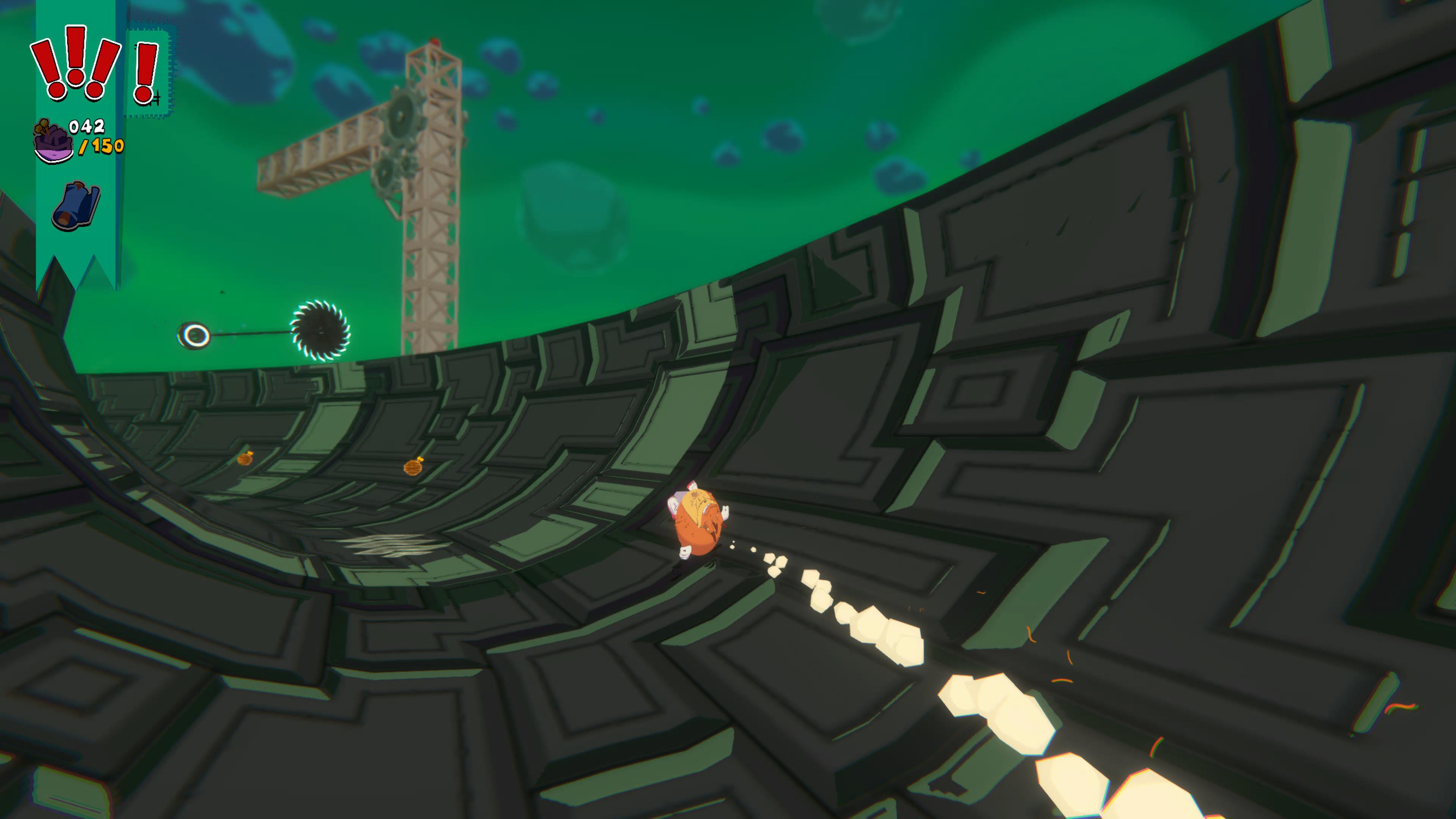
You do have to give Fabraz credit for trying to raise the stakes in bringing back this retro mascot, because Bubsy 4D could very easily have been a lazy nostalgia joke or a cynical resurrection. Instead, it’s a sincere attempt to reinterpret the old games’ awkward speed-run focus and chaotic platforming through a modern indie lens. It doesn’t always come together; the controls could be tighter, the levels more elegant and deeper to feel like spaces you want to explore and not simply wander around with secrets popping up here and there, and the humour does get a little on the nose.
Ultimately, while ‘better than expected’ isn’t enough to make Bubsy 4D a great platformer, it is enough to make it one of the more unexpectedly likeable mascot revivals in a while, and one which has at least had more care put into it than recycling the games, which for Bubsy honestly feels like a win.