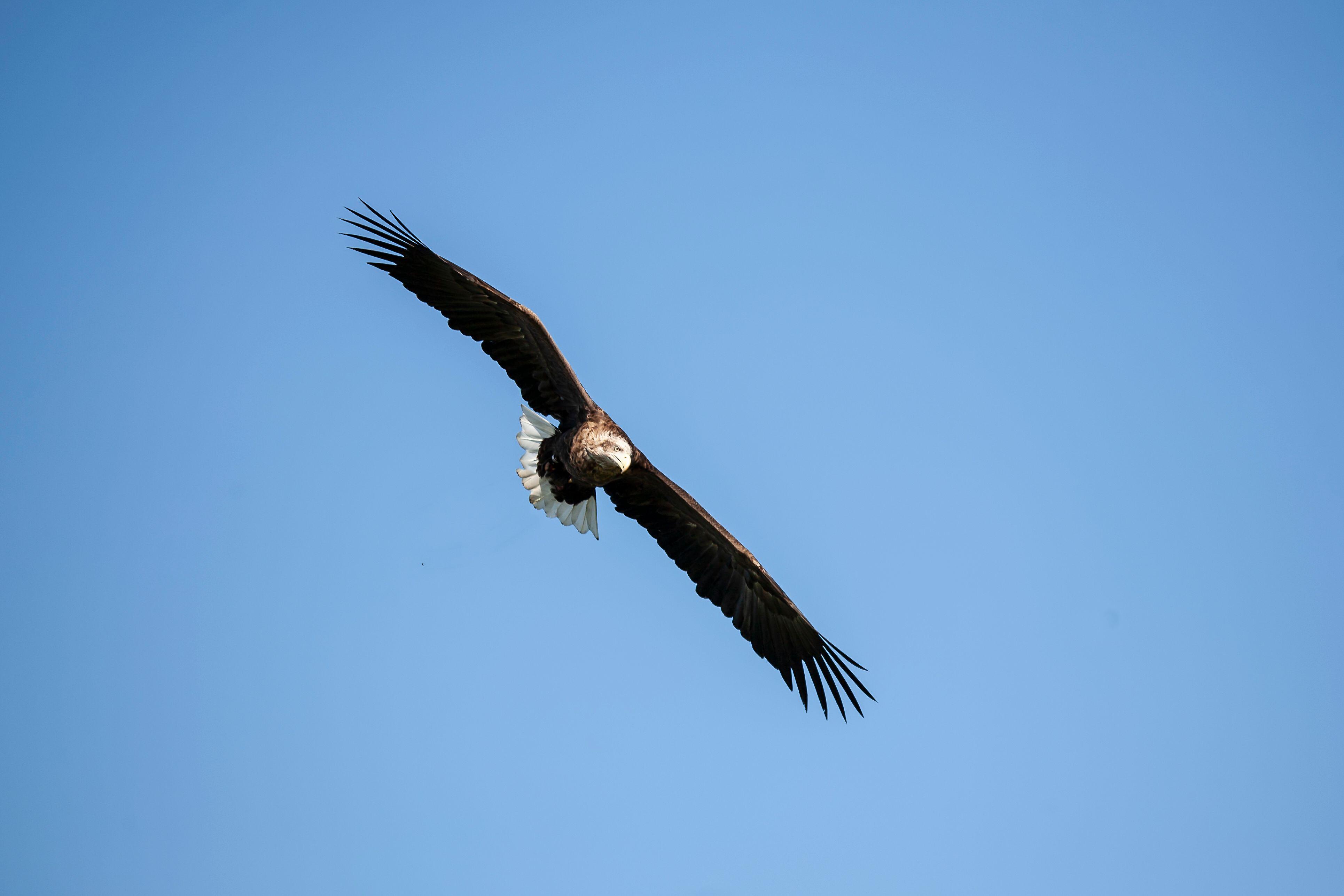
The majestic white-tailed eagle, the UK's largest bird of prey, is set to return to southern England with a new reintroduction scheme in Exmoor National Park, the government has confirmed.
Up to 20 young birds will be released over three years, boosting the species' comeback after being pushed to extinction across the country.
These magnificent raptors, nicknamed "flying barn doors" for their impressive 8ft (2.4m) wingspan, were once widespread in southern England until persecution wiped them out in the 18th century.
This initiative builds on a project by Forestry England and the Roy Dennis Wildlife Foundation, which began reintroducing white-tailed eagles on the Isle of Wight in 2019, aiming to restore the long-lost species to the region's skies.
The birds have previously been successfully reintroduced in Scotland.
Government conservation agency Natural England has approved licences for Forestry England and Roy Dennis Wildlife Foundation to work with Exmoor National Park Authority to release birds from the national park, in addition to ongoing releases on the Isle of Wight.
Releases of young birds will take place from both locations this summer, Natural England said.
Exmoor has been chosen as an additional release site to boost the number of birds in the wild and expand their breeding range into south-west England, in an area where it is known the species formerly bred along the coastline.
Data from satellite trackers attached to released eagles showed several have frequently visited the area, which provides suitable habitat for the birds that are also known as “sea eagles” and are frequently found around coastline and large open water bodies.
Some 45 young white-tailed eagles have been released from the Isle of Wight since the scheme began, with the first pair breeding successfully in 2023 and fledging the first chick to have been born in the wild in England for more than 240 years.
A further five chicks have been born in the wild since.
Roy Dennis, founder of the Roy Dennis Wildlife Foundation, said: “White-tailed eagles were once a common sight in England but were lost centuries ago.
“This project is reversing that situation, and I am delighted that we will be able to release additional birds this year and boost their numbers in the wild.”
Stephen Egerton-Read, white-tailed eagle project manager at Forestry England, said: “Seven years on from the start of this project, these birds have begun to successfully return to the English landscape – forming pairs, establishing territories and breeding.
“Adding additional releases at Exmoor will help to boost their numbers and continue their spread across southern England.
“We hope that in years to come these iconic birds will become a much more common sight.”
Environment Secretary Emma Reynolds said: “The return of white‑tailed eagles to Exmoor is a powerful example of this Government’s commitment to reversing the decline of nature and protecting it for generations to come,” pointing to £90 million invested into species recovery.
Natural England national delivery director Matthew Heard said it was a “hugely exciting step” in restoring landscapes.
Ali Hawkins, senior ecologist with Exmoor National Park Authority, said: “Exmoor, with its long expanse of coastal woodland, provides some amazing habitat for white-tailed eagles,” adding that the authority was committed to working with farmers and others to support them in adapting to the birds.
Despite concerns in some quarters that the birds could prey on livestock such as lambs, a study into the food the Isle of Wight birds are eating showed they were targeting prey such as cuttlefish, rabbits, fish and other birds, and there were “no conflicts” with farming,