How do we sum up the performance of the seven individuals who have led Australia this century? At least two preliminary observations are relevant.
That the nation has had a lean run with prime ministers during the recent past is not really that unexpected. History indicates there are peaks and troughs in prime-ministerial leadership: periods of abundance have been followed by fallow times.
For example, in the quarter-century from the second world war to the mid-1960s, Australia was governed by a trio of mighty leaders – John Curtin, Ben Chifley and Robert Menzies – only for the latter to be followed by a succession of relative also-rans: Harold Holt, John Gorton and William McMahon.
In a similar way, beginning with Bob Hawke’s election in 1983, the nation enjoyed a sequence of prime-ministerial titans: Hawke, Paul Keating and John Howard. I believe Howard’s quality of leadership deteriorated during his later terms of office. His legacy for the country and his own side of politics has been ultimately corrosive.
Even so, he unquestionably belongs in the top tier of Australian prime ministers, a conclusion that rankings of the nation’s leaders by political historians corroborate. In those rankings, Hawke vies with Curtin for top place, while Keating is also comfortably rated in the upper echelon of prime ministers.
The second observation is that the job of prime minister has undoubtedly grown more challenging. To a significant extent, those in the role have brought this fate on themselves. A long-term development in politics, and one not confined to Australia, is the elevated prominence of national leaders and the centralisation of power in their hands.
Just one way this phenomenon is manifest is summit season in international politics, when the world’s leaders congregate to make important decisions affecting both their nations and the globe as a whole. Various forces continue to underwrite the trend to leadership predominance while also increasing the demands of the role.
The dwindling bases of the major parties and the waning attachment of voters to them are simultaneously facilitating a migration of power to leaders while rendering the conditions for governing more volatile.
The withering of the bases of the major parties shows little sign of abating. For example, the membership of the once supreme Victorian division of the Liberal Party has, according to a recent estimate, shrunk to between 9,000 and 10,000. Those members are chiefly male, white and old: the average age is nearing 70. Literally, the party’s grassroots are dying.
Labor is doing better in terms of diversity of membership, but its rank-and-file is old too and numbers are little more than 50,000 nationally.
The diminishing vitality of the bases of the major parties, coupled with their nebulous philosophies, grants more autonomy to leaders while also placing greater onus on them to provide meaning to their missions.
Parliamentary parties have torn down prime ministers several times this century, but have oscillated between mutiny and meekness. The passivity of caucus in the Albanese Labor government – a party historically distinguished by its collectivist methods – is another symptom of loosening constraints on a prime minister.
Since the advent of television as a primary instrument of political communication, the media have been important contributors to the heightened prominence of leaders. In turn, the revolutionary transformations media have undergone this century have increased the degree of difficulty of the prime ministership. So profound and unsettling have those changes indeed been that they have arguably brought with them a degree of ungovernability.
When Howard entered office in 1996, the mass “broadcast” model of public communication that had served parties and leaders well during the second half of the 20th century was still dominant. However, by the time he lost power 11 years later, it was breaking down. The business models of the traditional media were collapsing, causing disruption to, and fragmentation of, the landscape. Round-the-clock news cycles and an accompanying insatiable hunger for content placed heavy extra demands on the media and the political class alike.
Kevin Rudd, Australia’s first 24/7 prime minister, attempted, with at best mixed results, to surf that wave. Most momentous was the dramatic rise of the new technology of dissemination: the internet. The anarchic, real time, “post-fact” logic of social media had far-reaching political effects. New social media platforms grew influential in opinion formation. In effect, “mass” media were eviscerated by a new form of narrowcasting.
In Australia there were distinctive, although certainly not unique, features of the media changes impacting politics. In the opening decades of this century, the dominant player in the landscape, Rupert Murdoch’s News Corp, “jumped the shark”.
Retreating from the principle of balanced coverage, especially in its commentary, News Corp newspapers embarked on the equivalent of a search-and-destroy mission against left-of-centre politics and other sections of the media that had the temerity not to share their ideological view. The publicly beloved ABC was a prime target of this bullying.
Later, the newspapers were joined in that crusade by Sky News Australia, a news and opinion channel acquired by News Corp in 2016. The unbridled partisanship and vendettas waged by the Murdoch outlets stimulated a growing chasm between progressive and conservative media and an associated diminution of meaningful community-wide political discourse and the genuine exchange of ideas.
In both the media and politics, there was a coarsening of debate and a loss of civility. These trends were supercharged by the whirlwind of social media.
Ironically, as time has gone on, it has grown evident that the more febrile the Murdoch media’s coverage has become, the less salience it has with the public. It is also becoming counterproductive for right-wing politics in this country. What its excesses have mostly done is propel conservatives towards the position of marginalisation they now inhabit.
Beginning with Rudd, the prime ministers of the early 21st century have grappled variously with the frenetic, fractious and polarised nature of the contemporary media. Though supported by small armies of media minders, they have been mostly confounded by it.
On the Liberal side, Tony Abbott in particular tried to channel his communications predominantly through ideological fellow travellers, a strategy that proved self-defeating. Some, principally Julia Gillard, were unable or unwilling to jump through the hoops of the media’s performative expectations. Others – Rudd and Scott Morrison are examples – tried too hard, only for their curated personas to dissolve into inauthenticity under the glare of the media’s many prying eyes.
Anthony Albanese’s approach has been different still: it is almost as if he has endeavoured to anesthetise the media through the mundanity of his communications.
All of them have found the setting one in which it is hard to break through to voters, to build and sustain a conversation with the electorate about policy or much else besides. This is not an alibi for the dearth of far-reaching reform this century, but it does make it more explicable.
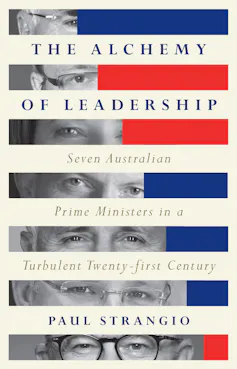
This is an edited extract from Paul Strangio’s new book, The Alchemy of Leadership: Seven Australian Prime Ministers in a Turbulent Twenty-first Century (MUP).
This article was originally published on The Conversation. Read the original article.