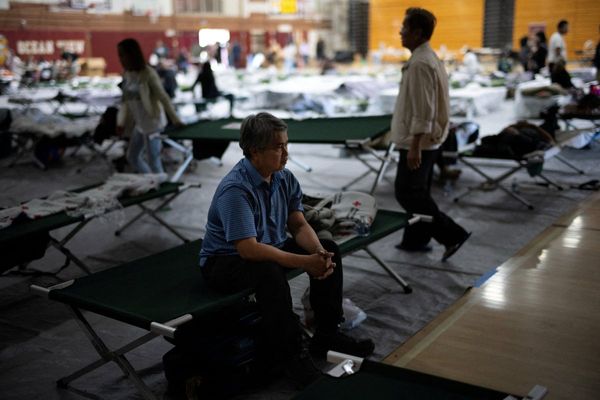
Russia launched a wave of overnight strikes on Kyiv early on Sunday, killing at least four people and leaving dozens more injured, local authorities said.
Two people were killed in the capital, while two more were killed in the surrounding region.
The intense assault shook buildings across the city centre including near government offices, residential buildings and schools.
Kyiv mayor Vitali Klitschko said in a post on Telegram that 56 people were wounded in the overnight attack, 30 of whom were hospitalised.
"Tonight Kyiv region is once again enduring a mass enemy attack with strike drones, cruise missiles and ballistic missiles," said Mykola Kalashnyk, the head of the regional ministry administration.
The attack continued after sunrise, with more missiles and drones expected to hit Kyiv. Damage was recorded across at least nine districts of the capital including residential buildings, Kyiv military administration head Tymur Tkachenko said in a Telegram post.
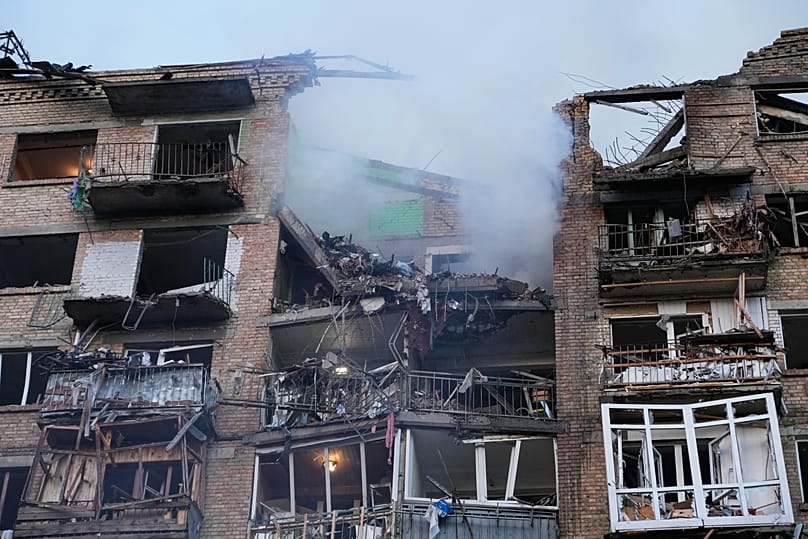
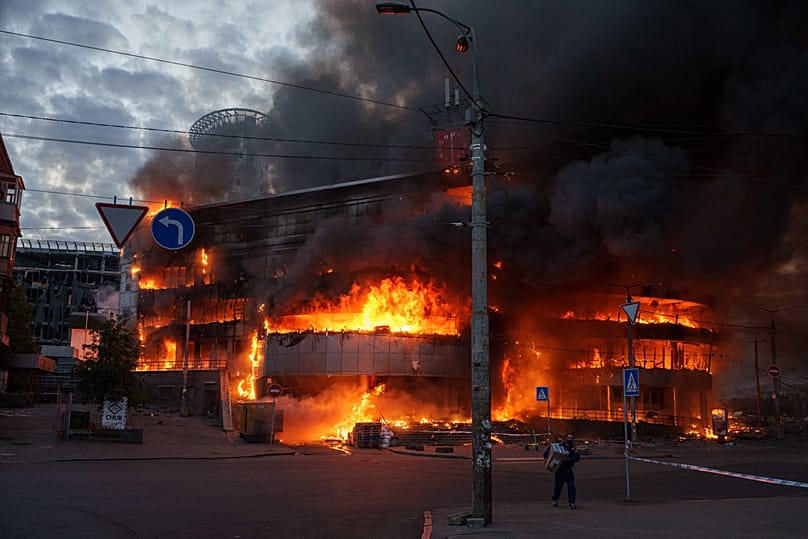
In the Shevchenko district, a school building was damaged by an attack while people sheltered inside, Klitschko said. Local authorities reported supermarkets and warehouses across the city were also damaged.
Ukrainian President Volodymyr Zelenskyy confirmed on Sunday that Russia had used the nuclear-capable Oreshnik missile in the attack. Russia's Defence Ministry has also confirmed that its forces used the missile.
It comes after Zelenskyy issued a warning a day earlier of intelligence indicating a possible attack with the hypersonic multiple-warhead missile.
The Oreshnik was first used on the Ukrainian city of Dnipro in November 2024. It was used a second time in January in the western Lviv region.
Russian President Vladimir Putin said the Oreshnik, which means “hazelnut tree” in Russian, streaks at 10 times the speed of sound and is capable of destroying underground bunkers “three, four or more floors down.”
The weapon travels “like a meteorite” and is immune to any missile defence system, Putin said, adding that several such missiles, even fitted with conventional warheads, could be as devastating as a nuclear strike.
Russia had earlier also warned Ukraine would face "inevitable and severe punishment" for an alleged Ukrainian strike on a college dormitory in Russian-occupied Starobilsk in eastern Ukraine, which Moscow said killed 18 people.
Ukraine denied targeting civilians, saying it had hit a Russian Rubicon drone unit stationed in the Starobilsk area.
Moscow has launched mass barrages of missiles and drones at Ukraine almost daily since the full-scale offensive began in 2022, often hitting civilian infrastructure and causing civilian deaths.
US-led efforts to negotiate an end to more than four years of war have slowed in recent months with Washington's attention diverted towards its conflict in the Middle East.