The historic Artemis II mission has launched, carrying the first crewed mission to the Moon since Apollo 17 in 1972.
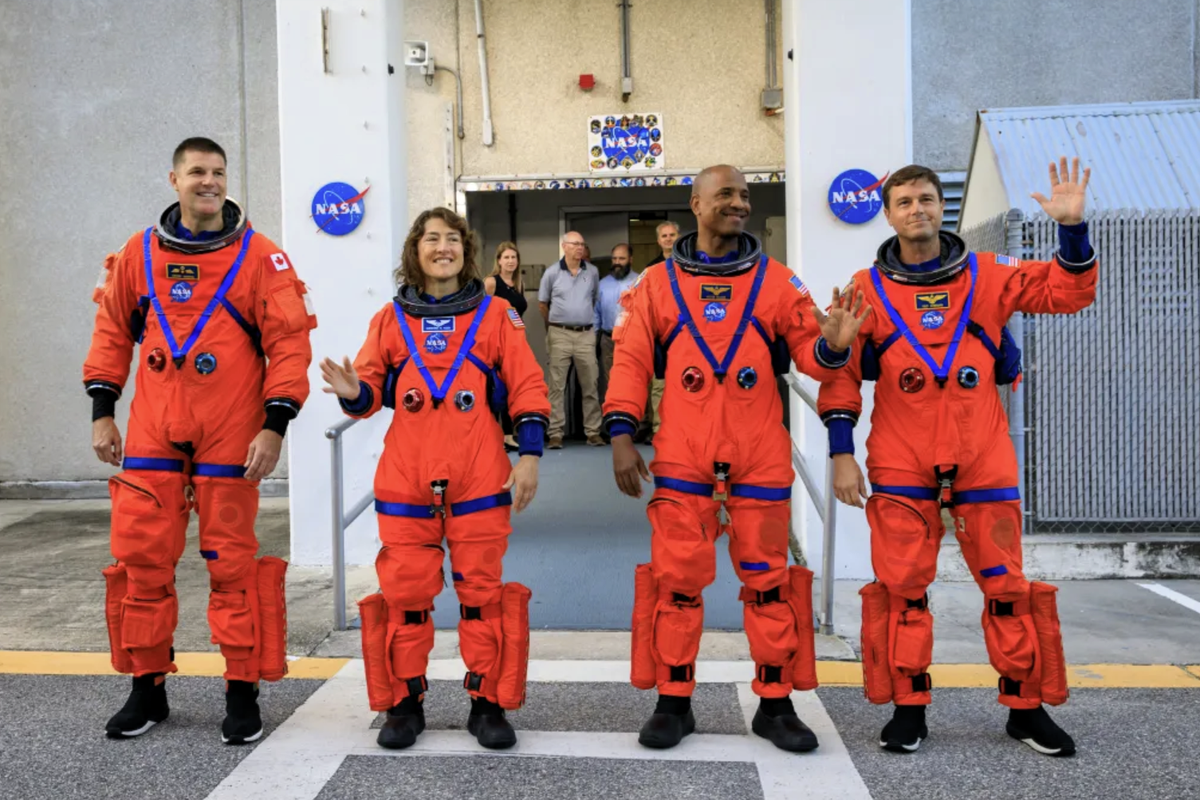
Launching off on the largest rocket ever built by Nasa, the Orion spaceship is carrying four astronauts – three Americans and one Canadian – lifted off from the Nasa Kennedy Space Center in Florida at 6.35pm Eastern Time.
Hours into the voyage, Nasa said the crew successfully concluded one of the mission’s early objectives to evaluate the manual handling qualities of Orion in space.
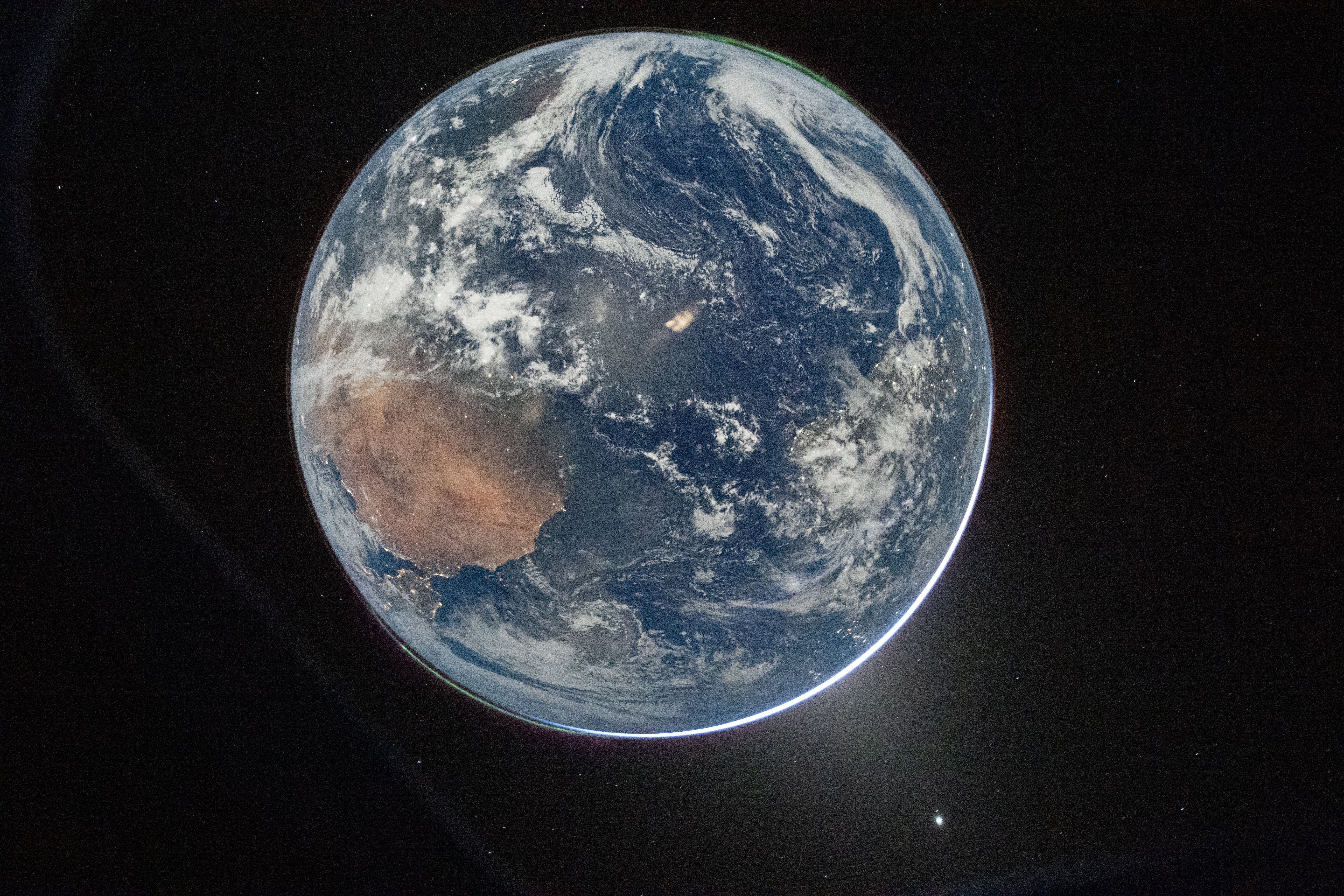
As the spacecraft left Earth’s atmosphere and made it’s way to the far side of the Moon, Commander Reid Wiseman said he cold see “the entire globe from pole to pole”, adding it was “the most spectacular moment and it paused all four of us in our tracks,” the BBC reported.
The mission involves a 10-day voyage that will take them around the far side of the Moon and back to Earth. While they will not land on the lunar surface, Nasa hopes that the mission will play a key role in helping establish a permanent settlement on the Moon in future.
The launch comes after weeks of fuel leaks and other issues that caused a previous liftoff attempt to be cancelled at the last moment.
Key Points
- Artemis II astronauts head to the Moon
- Nasa shares spectacular images of Earth from Orion capsule
- Why has it taken 50 years to return to the Moon?
- Live views from Orion spacecraft
- Orion's flight around the Moon - mapped
Live views from Orion spacecraft
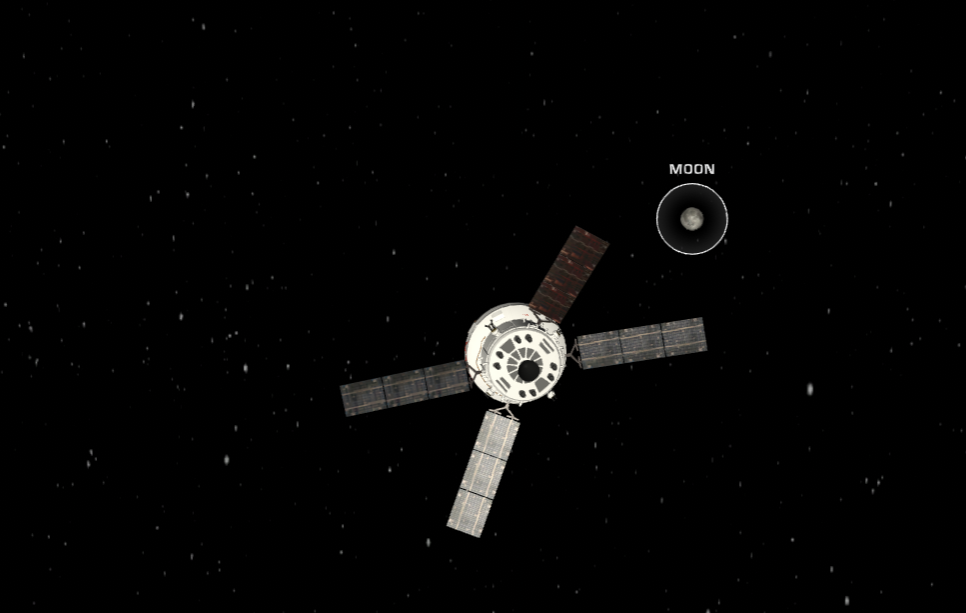
Friday 3 April 2026 10:53 , Anthony CuthbertsonNasa has shared live views from the Orion spacecraft as it makes its way to the Moon. Our celestial neighbour currently appears as a small dot on the right of the feed. You can watch it here.
Why astronauts are carrying iPhones to Moon
06:46 , Anthony CuthbertsonUnder a new initiative, the Artemis II mission marks the first time astronauts are allowed to take their personal smartphones beyond the Earth's orbit.
The crew members have taken iPhones with them with the aim of documenting the mission using the smartphones cameras, without relying on bulky, government-issued cameras.
Reports suggest the devices will be put on Airplane mode by the crew to prevent interference with spacecraft systems.
Why spaceflight is having a moment
04:43 , Anthony CuthbertsonFrom the blockbuster film Project Hail Mary i, to the ongoing Artemis II mission around the Moon, spaceflight is having a moment.
Scott Solomon, a professor of BioSciences at Rice University - the same institution where President John F. Kennedy made his famous ‘We choose to go to the Moon’ speech - reflects on this moment, and explores what might be accomplished.
Why spaceflight is having a moment, from Artemis to Project Hail Mary
Why has it taken 50 years to return to the Moon?
02:35 , Anthony CuthbertsonNasa has had the know-how and technology to send humans to the lunar surface for more than 50 years. So why is this the first trip to the Moon since the Apollo 17 flight in 1972?
Emily Margolis, who works at the National Air and Space Museum, has the answers.

Why has it taken 50 years to return to the Moon? A space historian explains
More images from the Artemis II crew
Saturday 4 April 2026 00:33 , Anthony CuthbertsonNasa has shared more images from the Artemis II crew, showing the Earth peeking out from one of the capsule’s window.
"Suddenly, we're up there with them."
— NASA (@NASA) April 3, 2026
We're sharing the Artemis II crew's first images from space—keep following our 24/7 live feed for the latest mission updates: https://t.co/BezILihoZc pic.twitter.com/OwgYsWnngp
Follow the Orion capsule with Nasa's live visualisation
Friday 3 April 2026 23:50 , Anthony CuthbertsonNasa has created a visualisation of Orion’s live position in space, showing its 252,000 mile journey to the Moon.
You can find it here.
'Even in darkness we glow'
Friday 3 April 2026 22:02 , Anthony CuthbertsonNasa shares more images of Earth taken by the Artemis II crew.
Even in darkness, we glow.
— NASA (@NASA) April 3, 2026
In this image of Earth taken by the Artemis II crew, we can see the electric lights of human activity. In the lower right, sunlight illuminates the limb of the planet. pic.twitter.com/kWcjHFvoDM
Nasa shares spectacular images of Earth from Orion capsule
Friday 3 April 2026 21:15 , Anthony CuthbertsonAs they continue to make their way towards the Moon, the four astronauts aboard the Orion capsule have shared some stunning pictures of Earth from their unique vantage point.
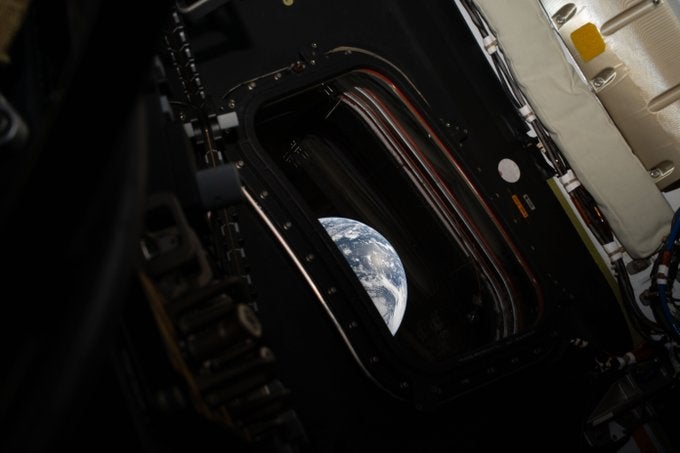
Nasa shared the image to its social media feeds, with the text: “We see our home planet as a whole, lit up in spectacular blues and browns. A green aurora even lights up the atmosphere. That’s us, together, watching as our astronauts make their journey to the Moon.”
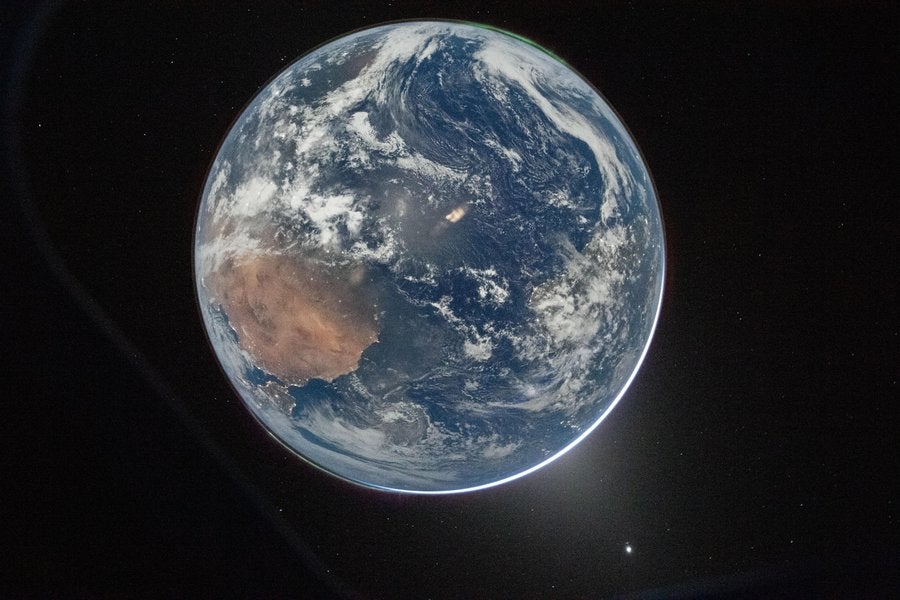
Orion's flight around the Moon
Friday 3 April 2026 20:25 , Anthony CuthbertsonAs the astronauts continue their journey towards the Moon, you can see the route they will take from this handy Nasa graphic.
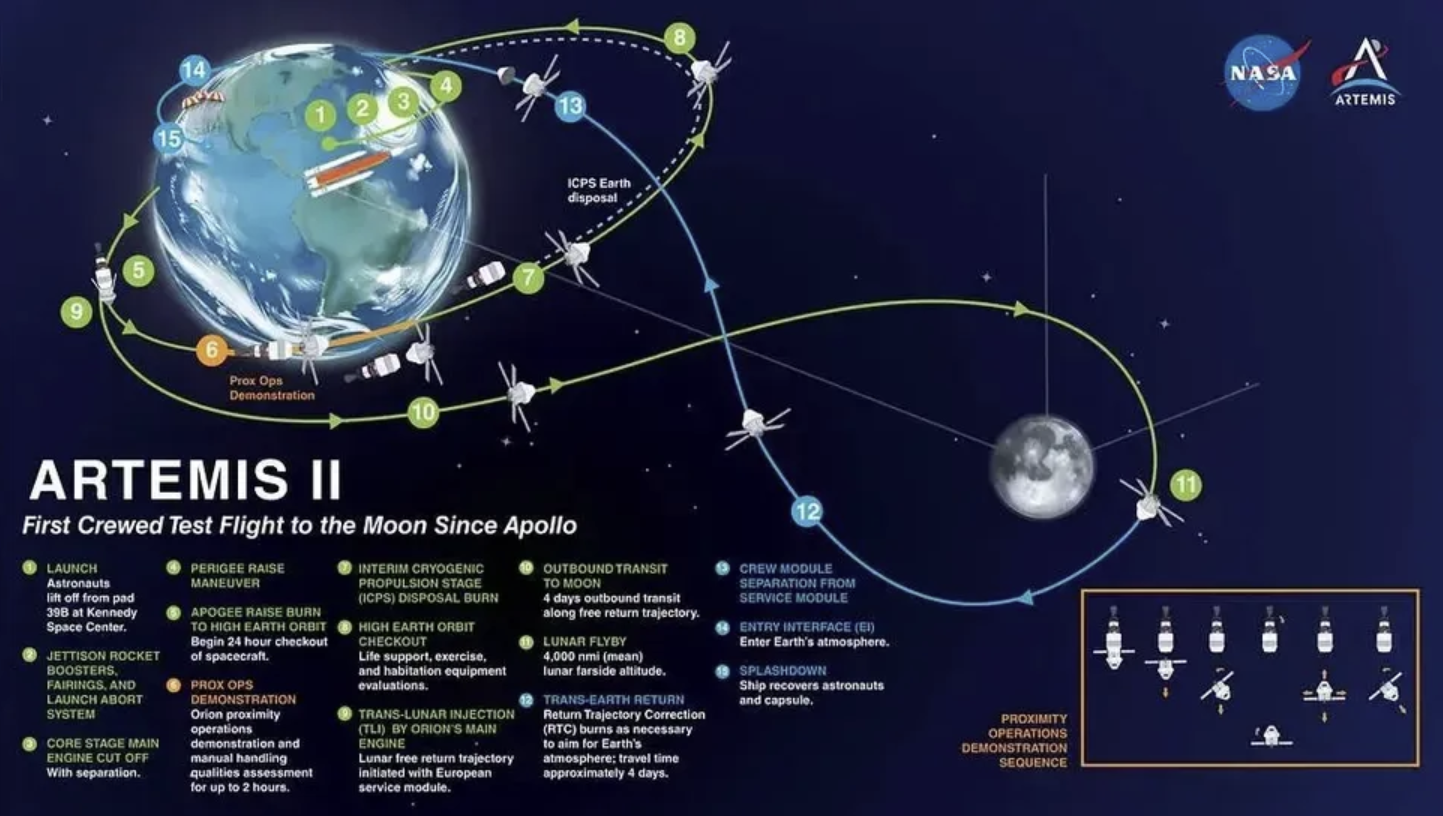
After lifting off from pad 39B at Kennedy Space Center in Florida on Wednesday evening, the SLS rocket was jettisoned before Orion performed a high-altitude orbit of Earth.
Then began a four-day outbound transit to the Moon, 400,000 kilometres (250,000 miles) away. After swinging by the Moon, Orion will return to Earth, eventually splashing down off the west coast of America.
How the UK is helping the Artemis II mission
Friday 3 April 2026 18:58 , Anthony CuthbertsonA communications site in Cornwall is playing a crucial role in Nasa's Artemis II mission, tracking the Orion spacecraft on its journey to and from the Moon.
Goonhilly Earth Station has a rich history in space communication, including broadcasting the Apollo 11 Moon landing in 1969 and previously supporting Nasa's Artemis I mission in 2022.
The UK government minister Baroness Lloyd and Nasa officials have emphasised the importance of British expertise and international collaboration in achieving ambitious space exploration goals.
You can read all about it here.
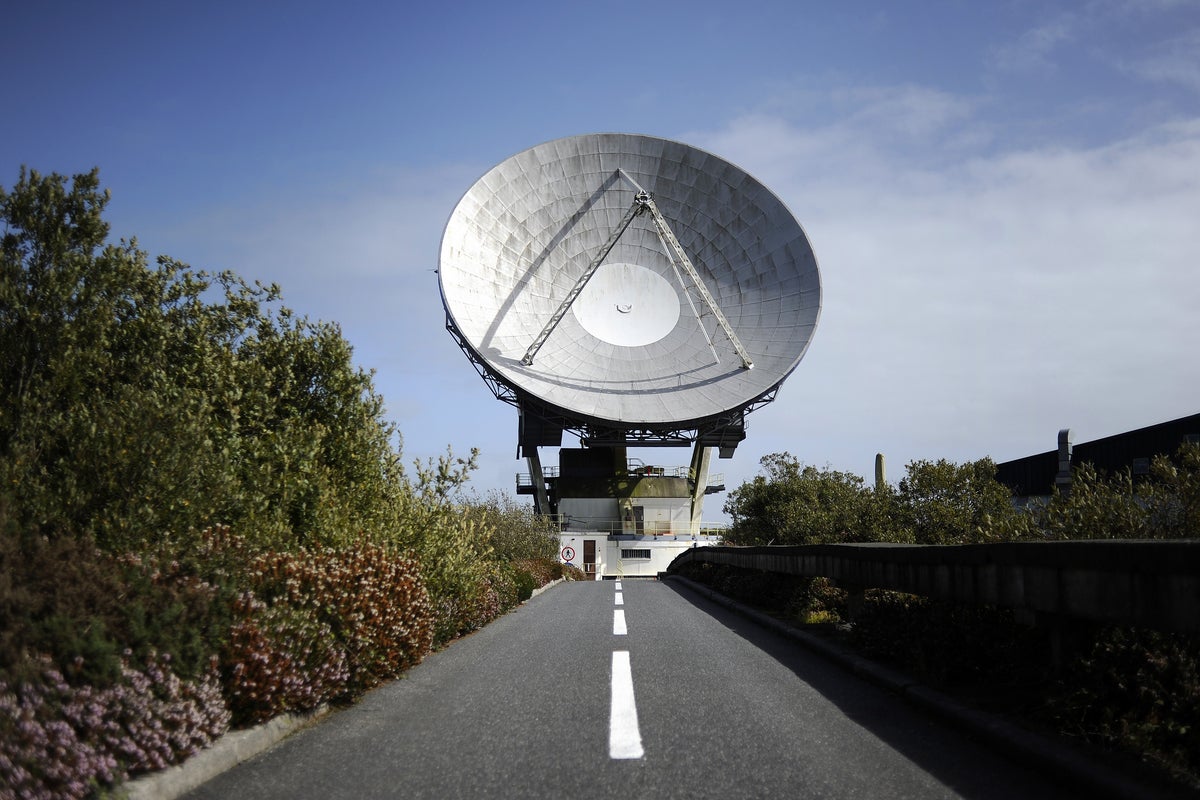
Goonhilly Earth Station: The centre helping to track Artemis II mission to the moon
How Artemis program compares to Apollo missions
Friday 3 April 2026 17:55 , Anthony CuthbertsonIt’s been more than 50 years since humans last stepped foot on the Moon as part of the Apollo program. So why has Nasa chosen to go back - and what makes the Artemis program different?
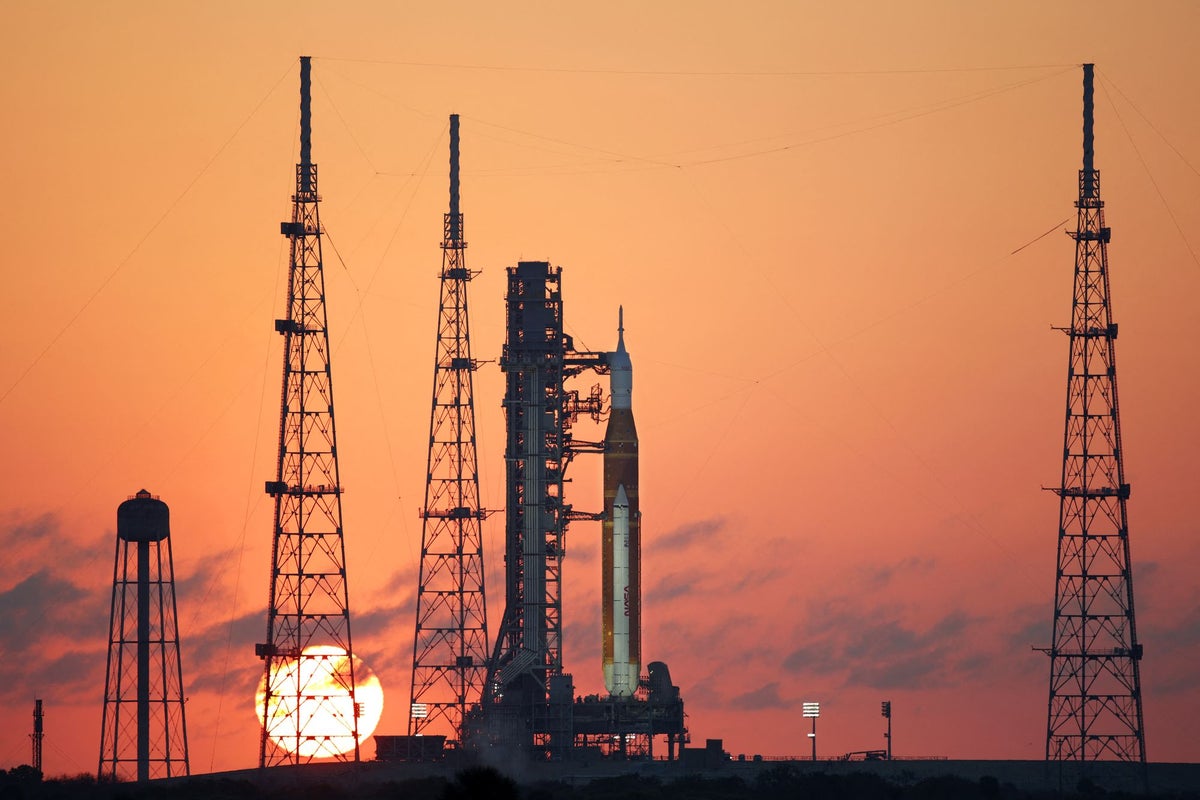
Nasa still targeting the first six days of April for Artemis launch
How space launches alter flight paths
Friday 3 April 2026 16:53 , Anthony CuthbertsonAir traffic tracker Flightradar24 has shared a visualisation of flights around Florida during Wednesday’s launch.
It shows the airspace being cleared off the east coast of Florida during the launch window for Artemis II, before resuming again shortly after.
Making a hole for #ArtemisII last night. Some flights over Florida were able to get a fantastic view of the launch. pic.twitter.com/V6Zu9fU7pO
— Flightradar24 (@flightradar24) April 2, 2026
Passengers on some of the planes flying nearby have shared videos of the launch, showing the rocket’s remarkable path to space.
🇺🇸 Talk about an in-flight movie upgrade no airline could ever plan: witnessing Artemis II’s liftoff from 35,000 feet above Florida.pic.twitter.com/Ufhnwj5n90 https://t.co/nH72e6uyJP
— Mario Nawfal (@MarioNawfal) April 2, 2026
How hard will it be to live on the Moon?
Friday 3 April 2026 15:55 , Anthony CuthbertsonArtemis II is not planning to stop at the Moon, but if the pathfinder mission is successful then the first humans will hopefully land on the lunar surface in 2028.
After that, Nasa plans to build a permanent base on the Moon, shuttling astronauts to and from our celestial neighbour in the same way it currently does for the International Space Station (ISS).
Living on the Moon for extended periods presents a number of brutal and unique challenges, including reduced gravity (about one-sixth of Earth’s), chronic exposure to cosmic radiation, extreme temperature swings, toxic lunar dust, isolation, disrupted sleep-wake cycles, and prolonged confinement.
You can read more about what will be required of future lunar inhabitants here:
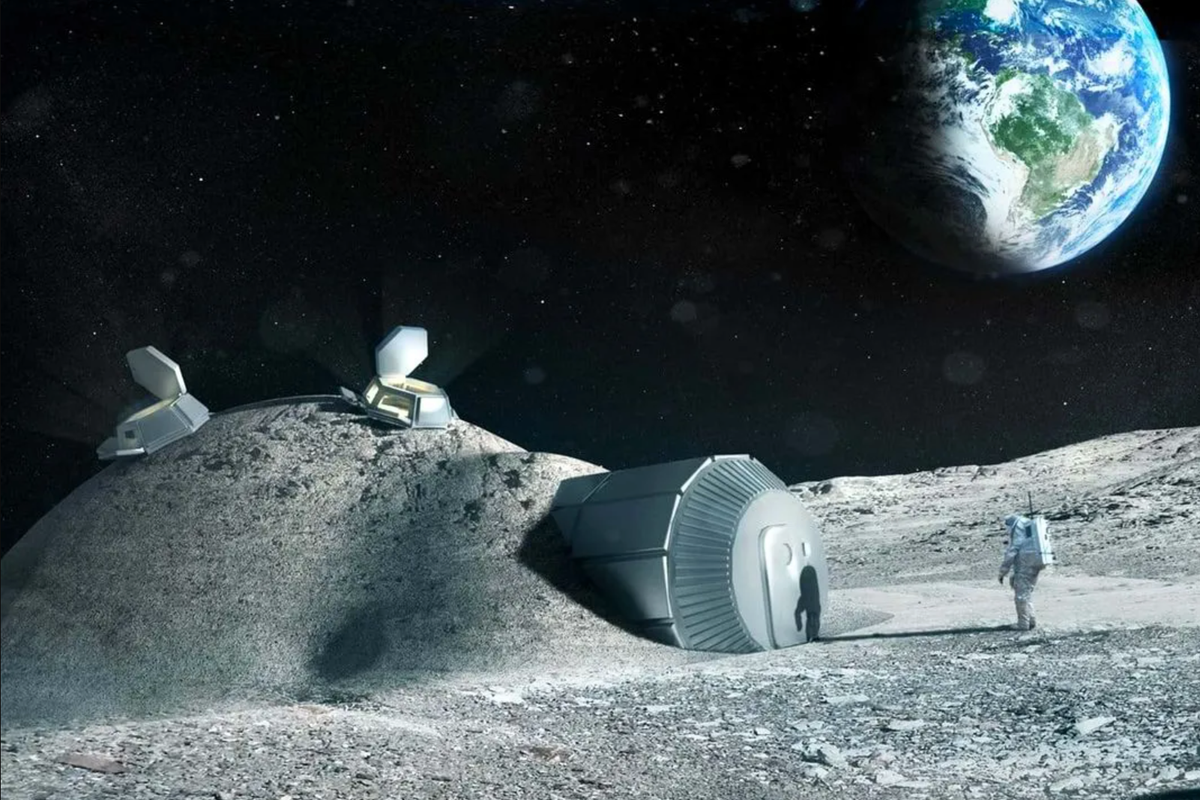
Nasa wants to put humans on the Moon. Here are the challenges they face
Artemis II crew member becomes 'space plumber'
Friday 3 April 2026 15:04 , Anthony CuthbertsonArtemis II crew member Christina Koch has revealed that she was the “space plumber” who fixed the $30 million toilet aboard the Orion spacecraft on Thursday after it malfunctioned.
You can see her comments here:
What are the Artemis astronauts doing on their way to the Moon?
Friday 3 April 2026 14:35 , Anthony CuthbertsonFor their four-day trip to the Moon, the four-person crew of the Orion spacecraft will have time to eat, sleep, and exercise, but they also have some duties to carry out.
Firstly, they will need to make sure the craft stays on course, and carry out some burns if the trajectory needs to be altered. They also need to prepare their Lunar Targeting Plan, which they will need to follow when they reach the far side of the Moon on Monday. This will allow them to carry out observations of the lunar surface without the help of ground crews - who will be out of reach for 30-50 minutes.
There will likely be some media duties over the weekend, as well as calls with friends and family.
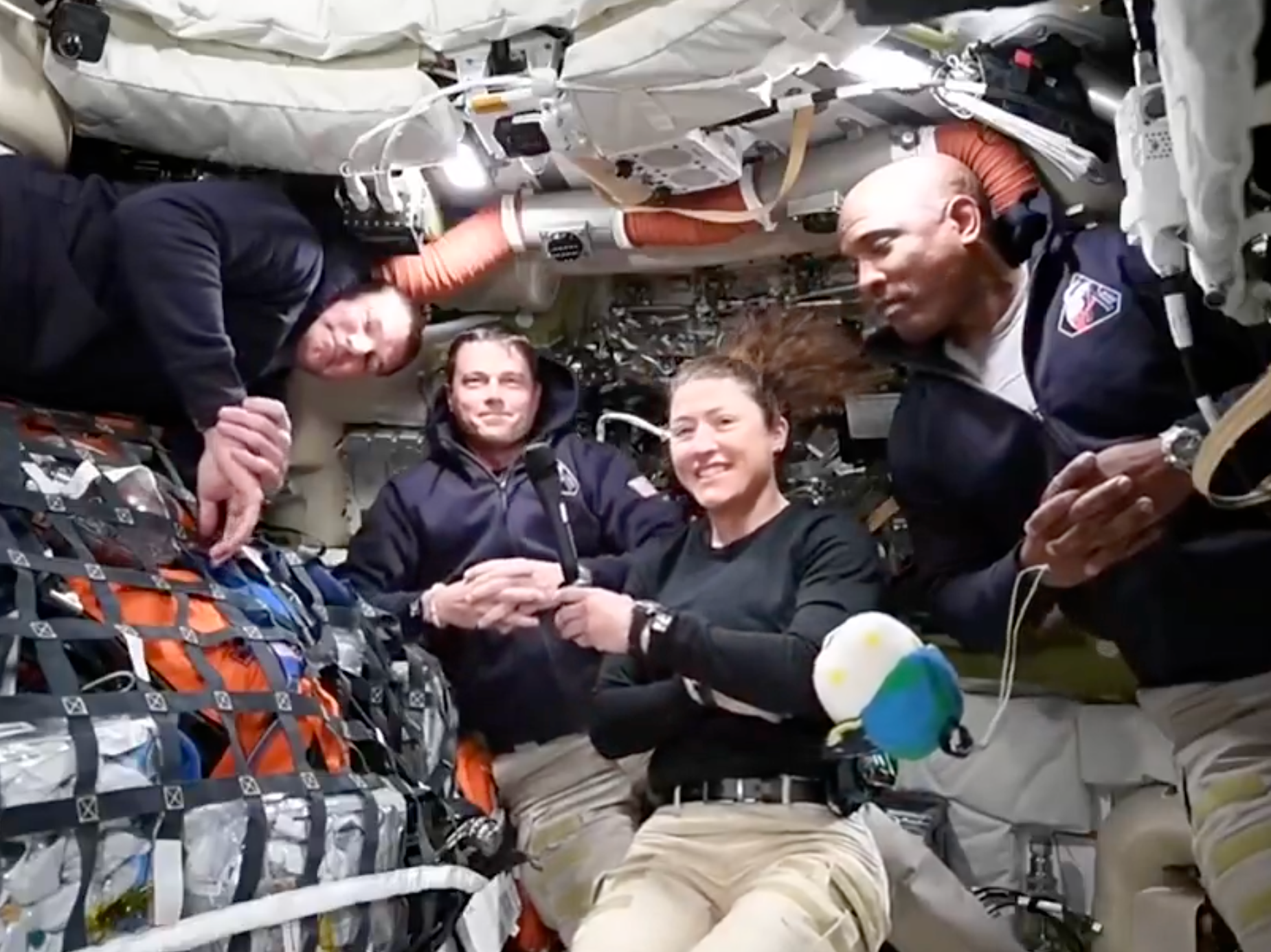
Relive Nasa's historic Moon launch
Friday 3 April 2026 13:43 , Anthony CuthbertsonIf you missed Wednesday evening’s launch of the Artemis II mission, you can watch it here:
Elon Musk announces next flight test of Starship rocket
Friday 3 April 2026 12:31 , Anthony CuthbertsonSpaceX boss Elon Musk has revealed that the next Starship flight test will take place next month.
It will be the 12th flight test of the biggest rocket ever built, which Nasa hopes to use as part of future Artemis missions to transport people and cargo to the Moon.
Next flight of Starship and first flight of V3 ship & booster is 4 to 6 weeks away pic.twitter.com/tg4OQQ7pyI
— Elon Musk (@elonmusk) April 3, 2026
The test comes six months after the last Starship flight test, which saw the Starship craft and its Super Heavy booster launch from SpaceX’s Starbase facility in Texas before the uncrewed craft splashed down in the Indian Ocean.
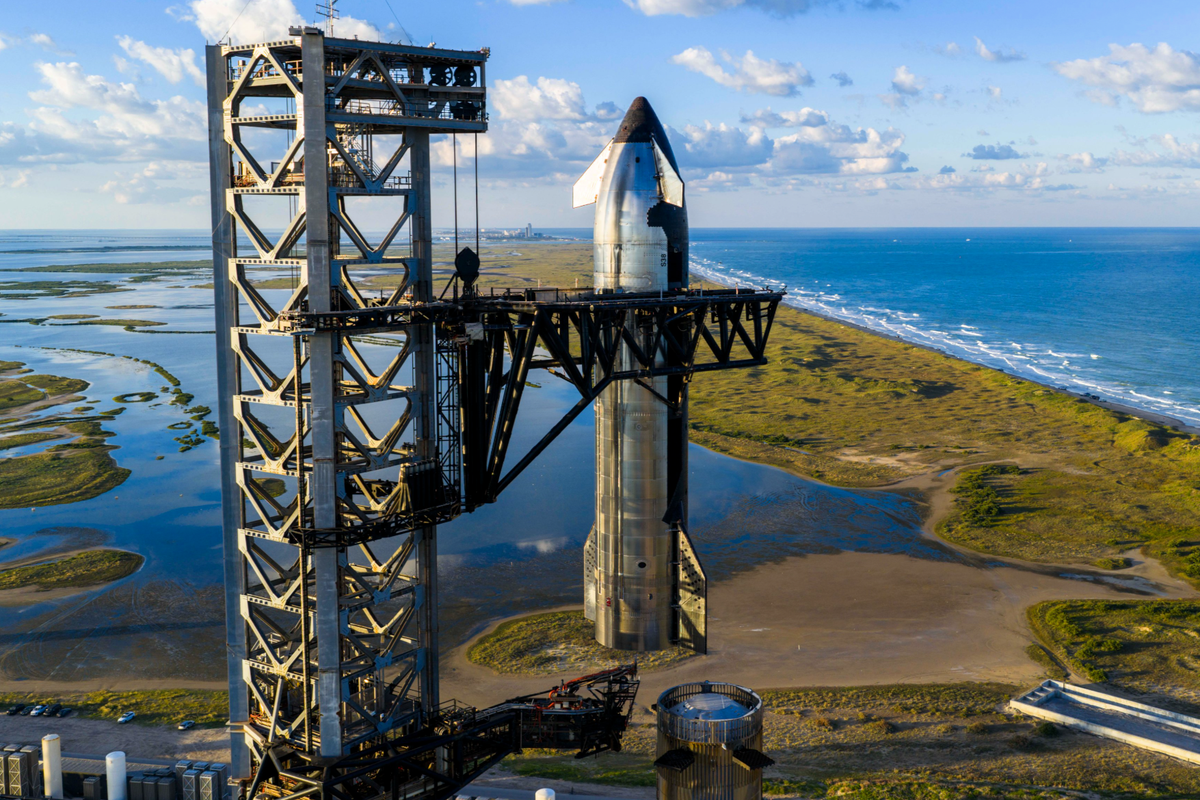
SpaceX to launch Starship today in crucial test of Elon Musk’s Mars plans
What's next for the Artemis II mission?
Friday 3 April 2026 10:13 , Anthony CuthbertsonAfter successfully completing the critical engine burn to send them out of Earth’s orbit, the four-person crew aboard the Orion capsule now have four days before they reach the Moon.
Nasa says they will spend this time working on the Lunar Targeting Plan, which outlines the observations they plan to make of the far side of the Moon when they pass around it on Monday.
Once Orion has slingshots around the Moon, the astronauts will begin their four-day trip back to Earth. Their return module will separate from the rest of the spacecraft before re-entering Earth’s atmosphere at record speed.
Parachutes will deploy and the craft will splashdown in the Pacific Ocean, just off the west coast of America.
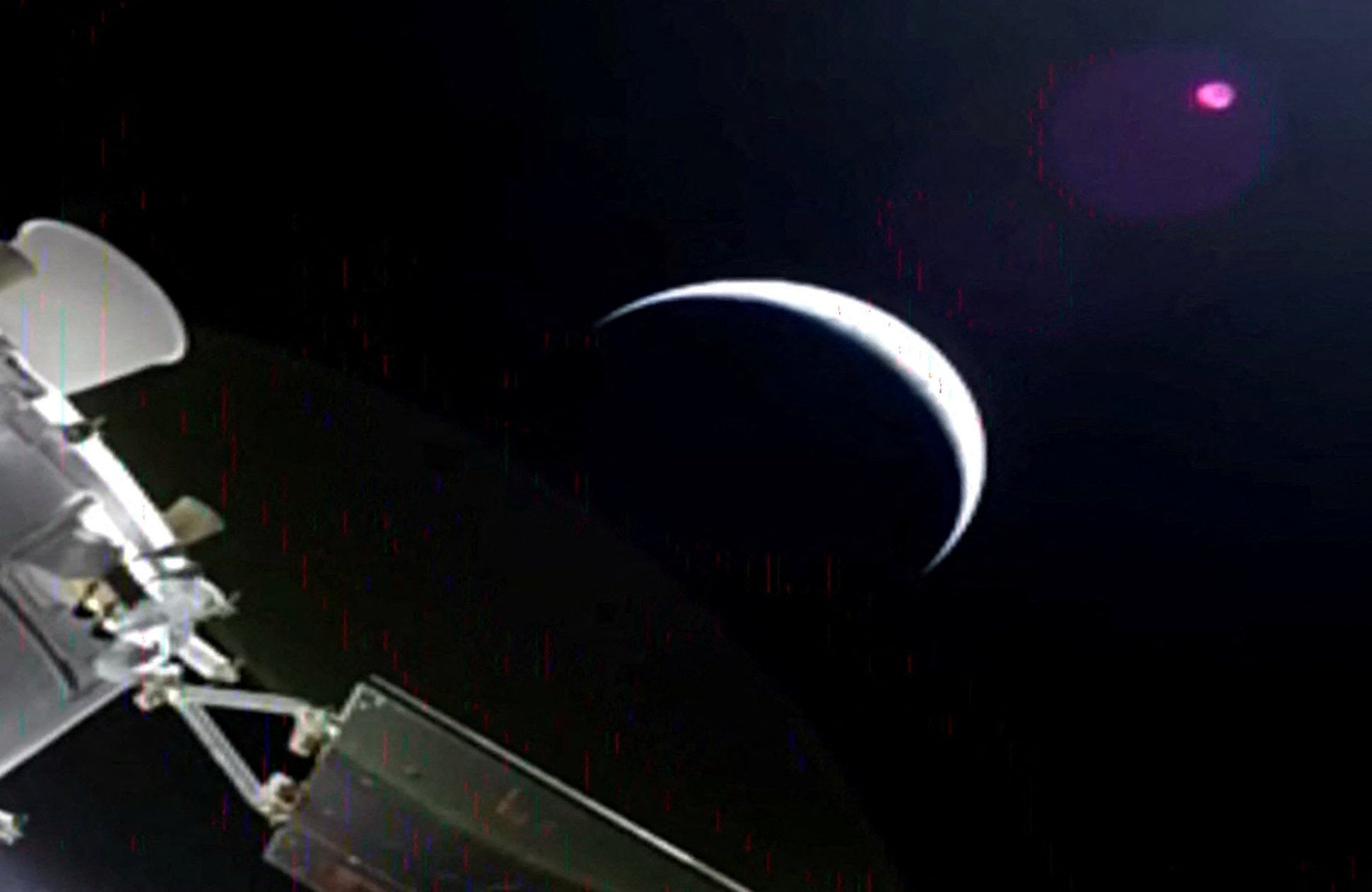
Where is Goonhilly Earth Station? The communications site helping to track Artemis II mission to the moon
Friday 3 April 2026 09:35 , Rebecca WhittakerA British satellite earth station is playing a crucial role in Nasa's Artemis II mission to the Moon.
Goonhilly Earth Station, located near Helston, Cornwall, will track the Orion spacecraft on its journey around the lunar surface and back to Earth.
Read more here:
Goonhilly Earth Station: The centre helping to track Artemis II mission to the moon
Astronauts said they were glued to the windows to see the 'phenomenal' view
Friday 3 April 2026 09:30 , Rebecca WhittakerAs the four astronauts left Earth’s atmosphere the crew were glued to the windows to see the “phenomenal” view, Canadian astronaut Jeremy Hansen said.
“Humanity has once again shown what we are capable of, and it’s your hopes for the future that carry us now on this journey around the moon.”
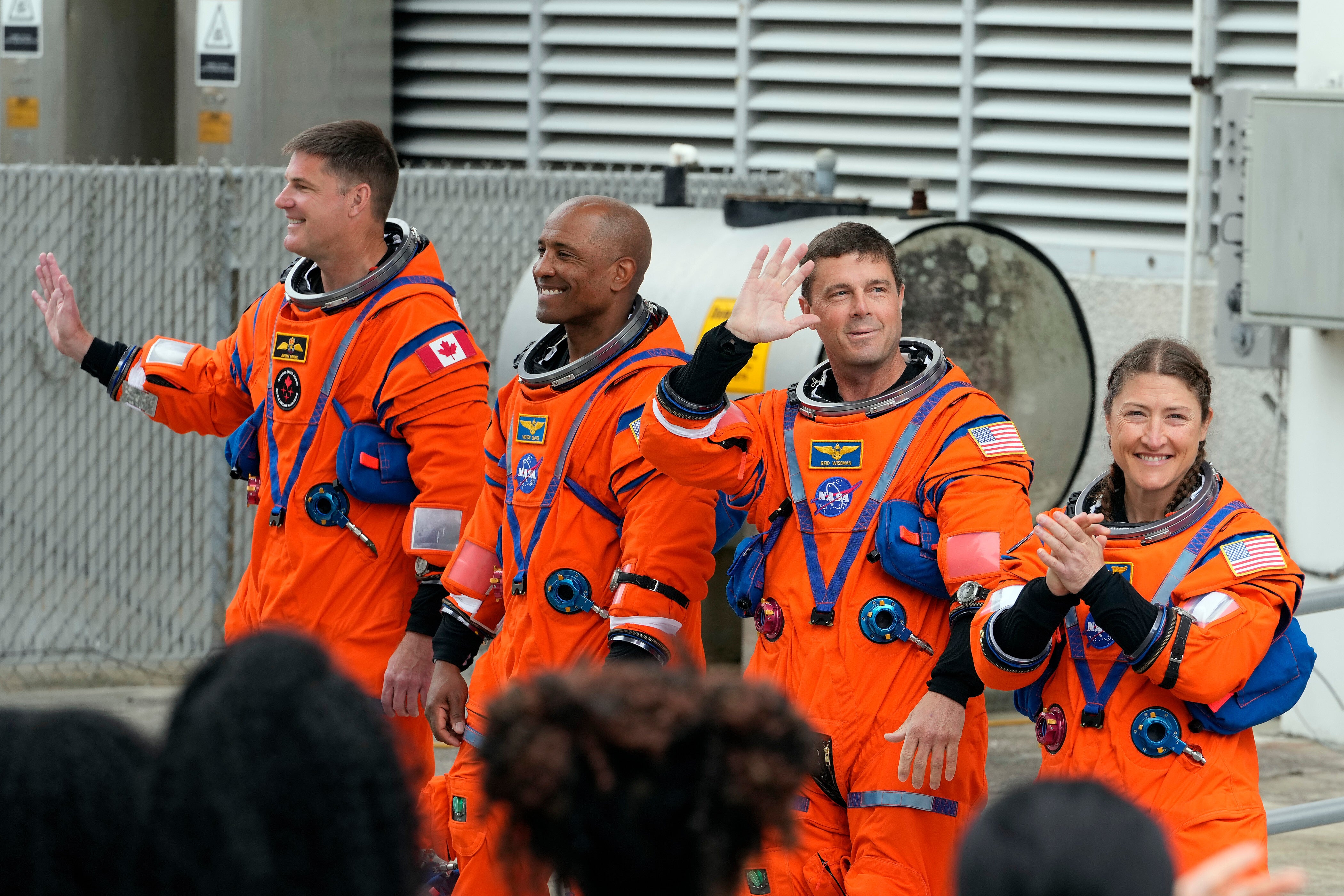
Artemis II mission is hoping to break a record and send humans the furthest ever
Friday 3 April 2026 09:25 , Rebecca WhittakerThis Artemis II mission is hoping to break the record for the furthest humans have travelled from Earth.
Nasa said Orion’s main engine, which burned for five minutes and 50 seconds, provides up to 6,000lb of thrust – enough to accelerate a car from 0 to 60 mph in about 2.7 seconds.
The Orion spacecraft will head around 4,000 miles beyond the moon with a lunar flyby on Monday the next major milestone which will send the crew some 252,000 miles (406,000 kilometres) into space before returning to Earth.
The current record for the furthest spaceflight is about 248,000 miles, held by members of the Apollo 13 lunar mission in 1970, which was hit by technical problems.
While the astronauts will not touch down on the Moon, the Artemis II mission paves the way for a future lunar landing and also lays the foundation to send a crew to Mars.
Watch: Artemis II cockpit footage shows crew describe views of Earth after takeoff
Friday 3 April 2026 09:20 , Rebecca Whittaker'It was the most spectacular moment ' astronauts say as they leave Earth's atmosphere
Friday 3 April 2026 09:10 , Rebecca WhittakerAs the Artemis II spacecraft makes its way to the far side of the Moon, the four astronauts on board have shared what they have seen.
Commander Reid Wiseman said he cold see “the entire globe from pole to pole” from his view thousands of miles from Earth.
It was “the most spectacular moment and it paused all four of us in our tracks,” he said.
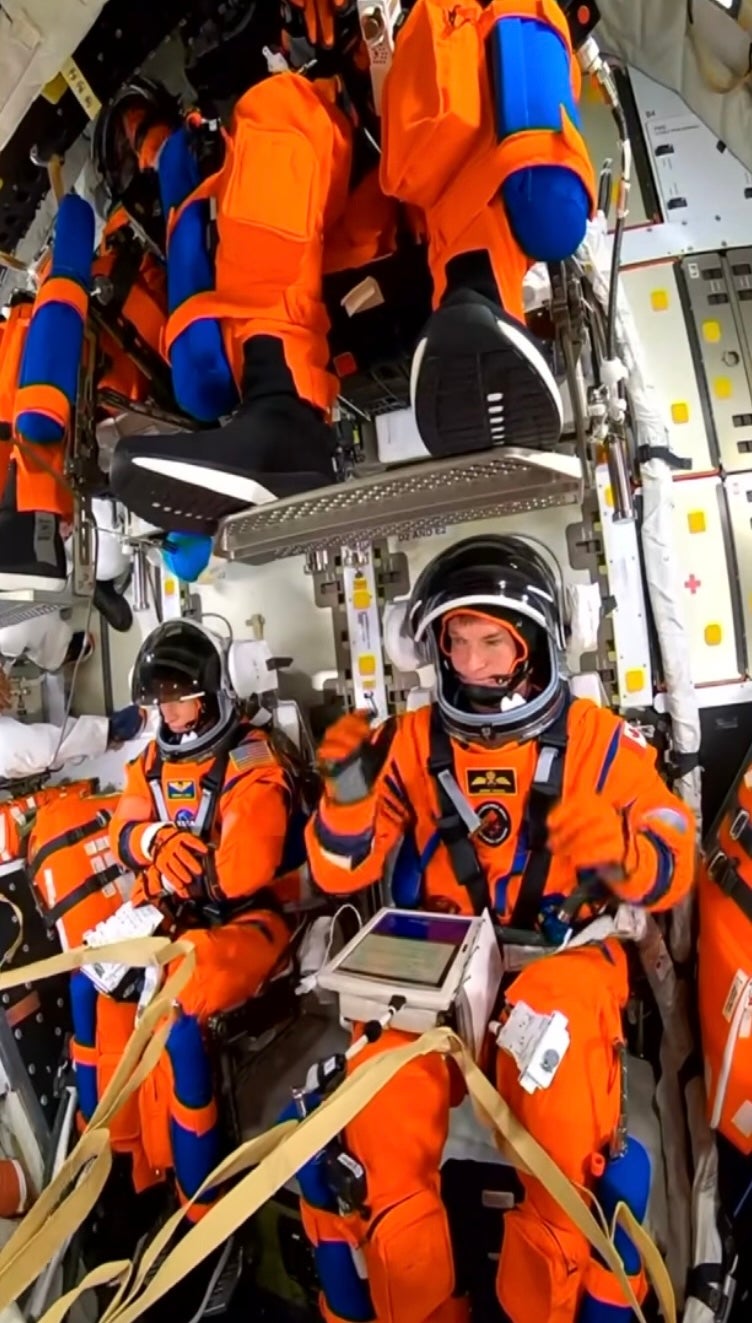
How astronauts left Earth's orbit
Friday 3 April 2026 06:12 , Anthony CuthbertsonAs the four astronauts aboard the Orion capsule begin their roughly 400,000 kilometre (250,000 mile) journey to the Moon, you can read all about how the astronauts performed the crucial translunar burn and left Earth’s orbit for the first time sine 1972.
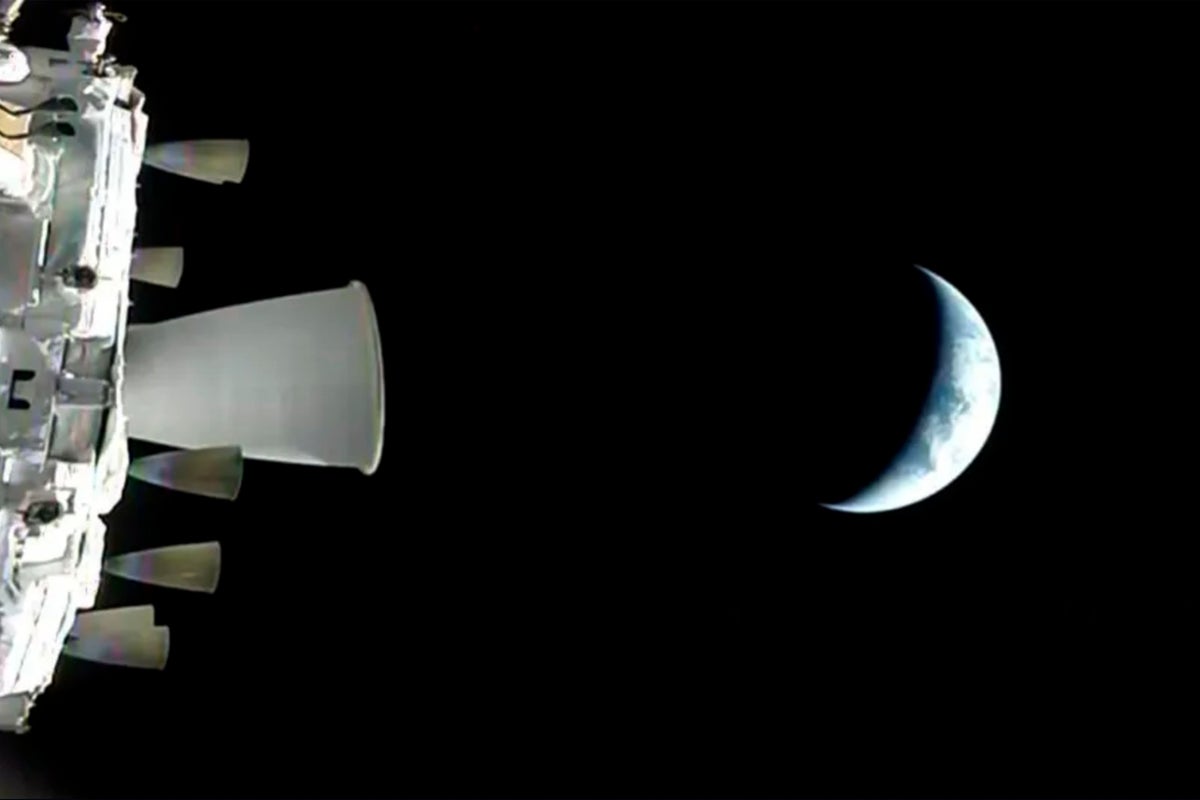
Humans leave Earth orbit for first time since 1972 as Artemis II heads to the moon
'America will never give up the Moon again'
Friday 3 April 2026 05:58 , Anthony CuthbertsonFollowing the successful translunar injection burn, which took the Orion spacecraft out of Earth’s orbit, Nasa Administrator Jared Isaacman has been speaking about the US space agency’s motivations for this mission and the Artemis program more generally.
“We’re in the second space race,” he told Fox News. “We are back in the business of sending astronauts to the Moon. We already won, but we are doing everything we can to win again. America will never give up the Moon again.”

Orion spacecraft leaves Earth's orbit
Friday 3 April 2026 05:49 , Anthony CuthbertsonAstronauts aboard the Orion spacecraft are on their way to the Moon after performing a six minute burn to leave Earth’s orbit.
“Today, for the first time since Apollo 17 in 1972, humans have departed Earth orbit,” said Dr Lori Glaze, acting associate administrator for the Exploration Systems Development Mission Directorate at Nasa Headquarters in Washington.
“Each milestone we reach marks meaningful progress on the path forward for the Artemis program. While we have eight intensive days of work ahead, this is a big moment, and we’re proud to share it with the world.”
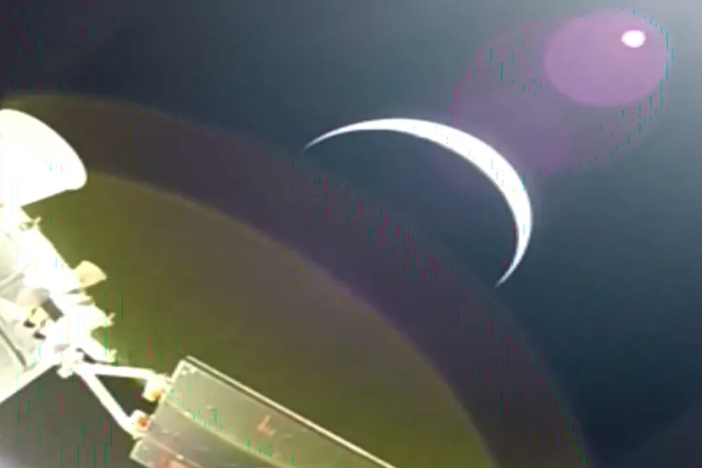
The path of Nasa's Artemis II mission around the Moon
Friday 3 April 2026 03:15 , Anthony CuthbertsonNasa has provided a handy graphic of the route the Artemis II crew is taking in their flight around the Moon aboard the Orion spacecraft.
After lifting off from pad 39B at Kennedy Space Center in Florida, the SLS rocket was jettisoned before Orion performed a high-altitude orbit of Earth.
Then began a four-day outbound transit to the Moon, 400,000 kilometres (250,000 miles) away. After swinging by the Moon, Orion will return to Earth, eventually splashing down off the west coast of America.
Why has it taken 50 years to return to the Moon?
Friday 3 April 2026 02:35 , Anthony CuthbertsonNasa has had the know-how and technology to send humans to the lunar surface for more than 50 years. So why is this the first trip to the Moon since the Apollo 17 flight in 1972?
Emily Margolis, who works at the National Air and Space Museum, has the answers.
Why has it taken 50 years to return to the Moon? A space historian explains
The Moon mascot making the 400,000km journey
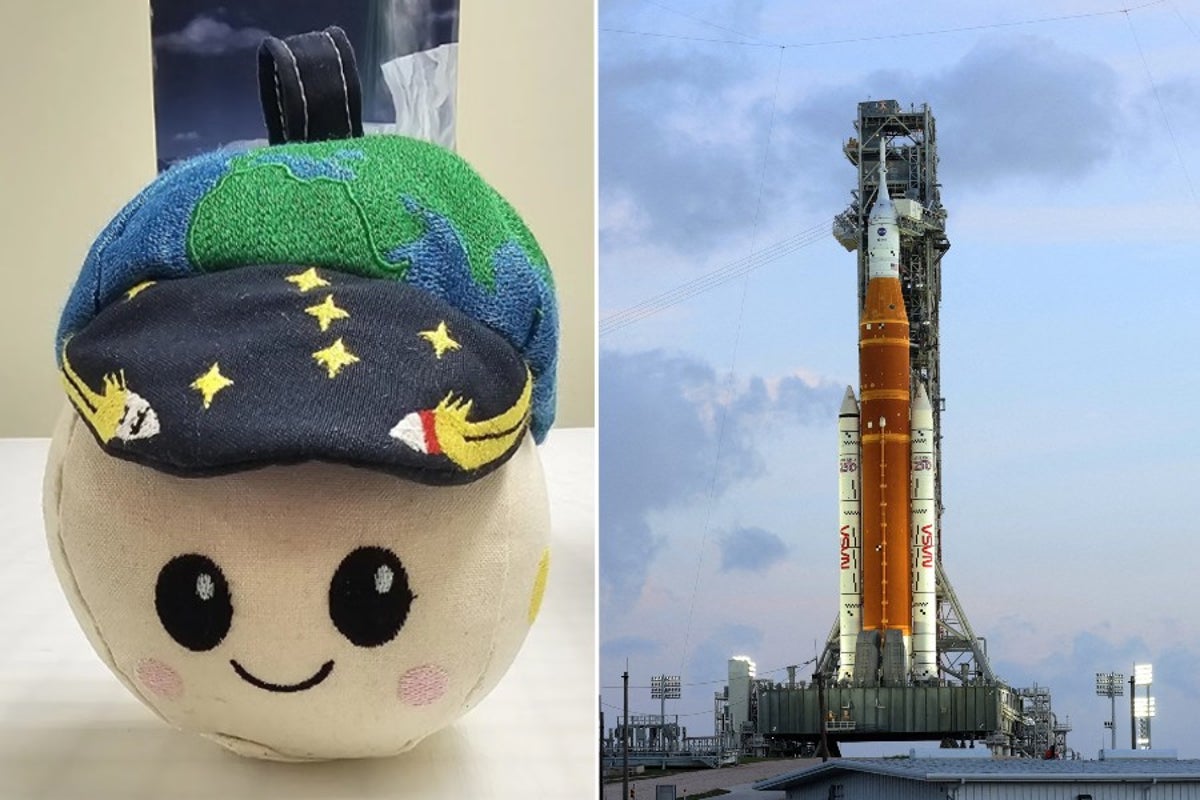
Friday 3 April 2026 00:31 , Anthony CuthbertsonThe four astronauts of the Artemis II mission are not alone on their journey to the Moon. Joining them is a softball-sized toy that was designed by a second grader from California.
Named Rise, the mascot is primarily there to serve as a zero gravity indicator: as soon as it started floating yesterday, the crew knew that they had made it to space. But it is also carrying a MicroSD card with the names of 5.6 million people from around the world on it.
You can read all about the best-travelled toy in the Solar System here.
Meet ‘Rise’ the official mascot of the Artemis II moon mission
The brutal challenges of putting humans on the Moon
Thursday 2 April 2026 22:25 , Anthony CuthbertsonThe goal of the Artemis programme isn’t to just leave “flags and footprints”, as the Apollo missions did, Nasa wants to establish a sustained human presence on the Moon.
But what would it really be like to spend an extended period on the lunar surface? The answer is exhilarating – and brutally unforgiving.
As an exciting new era of deep-space exploration opens up, Damian Bailey looks at the challenges astronauts will face.
Nasa wants to put humans on the Moon. Here are the challenges they face
Artemis II astronauts 'doing great'
Thursday 2 April 2026 20:36 , Anthony CuthbertsonNasa Administrator Jared Isaacman has shared an update on social media of the crew’s progress.
“Artemis II astronauts are doing great,” he wrote on X.
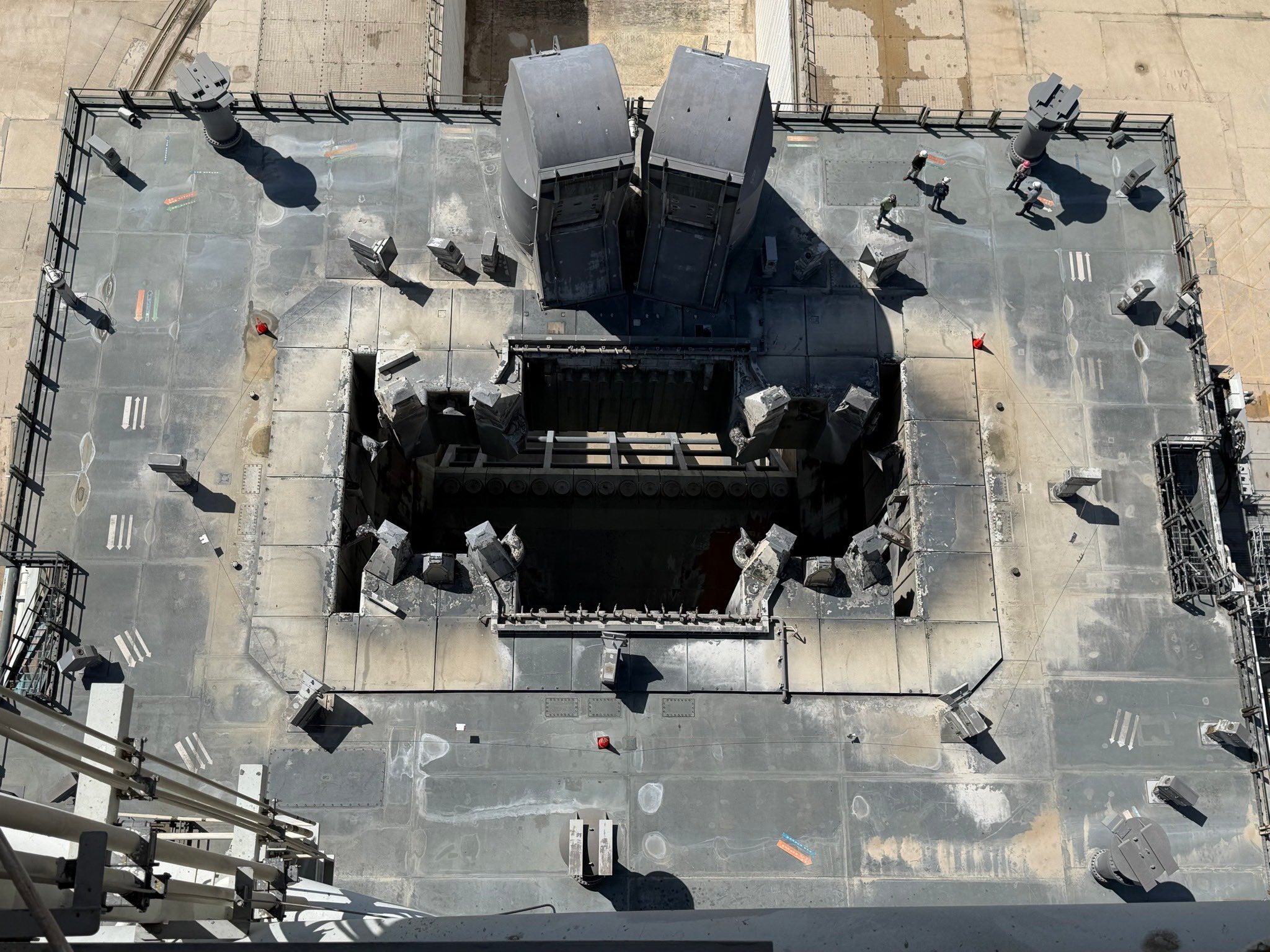
“The Orion spacecraft is performing well in an impressive elliptical orbit, and the Mission Control team is taking good care of the crew. Meanwhile, back at [the Kennedy Space Center}, the teams are out at the pad getting ready for what comes next.
“We are going to get into a rhythm of launching Moon rockets around here.”
Astronauts wake up ahead of crucial next phase
Thursday 2 April 2026 19:43 , Anthony CuthbertsonWe have heard from the Nasa live feed that the astronauts aboard the Orion spacecraft are now waking up from a 4.5 hour rest period.
Next up will be a trans-lunar injection burn that will propel them out of Earth’s orbit and towards the Moon.
The burn should last for around six minutes, if all goes to plan, and they will reach lunar orbit on Monday.
Flights around Florida 'make a hole' for Artemis
Thursday 2 April 2026 19:11 , Anthony CuthbertsonAir traffic tracker Flightradar24 has shared a visualisation of flights around Florida during yesterday’s launch.
It shows the airspace being cleared off the east coast of Florida during the launch window for Artemis II, before resuming again shortly after.
Making a hole for #ArtemisII last night. Some flights over Florida were able to get a fantastic view of the launch. pic.twitter.com/V6Zu9fU7pO
— Flightradar24 (@flightradar24) April 2, 2026
Passengers on some of the planes flying nearby have shared videos of the launch, showing the rocket’s remarkable path to space.
🇺🇸 Talk about an in-flight movie upgrade no airline could ever plan: witnessing Artemis II’s liftoff from 35,000 feet above Florida.pic.twitter.com/Ufhnwj5n90 https://t.co/nH72e6uyJP
— Mario Nawfal (@MarioNawfal) April 2, 2026
Houston, we have a toilet problem
Thursday 2 April 2026 17:23 , Anthony CuthbertsonAs reported earlier, there was a pretty pressing problem for the crew of the Artemis II mission earlier today: the toilet inside their 330-cubic-feet (9m³) Orion spacecraft was malfunctioning.
The astronauts spotted a blinking fault light – like a ‘check engine’ light in a car – indicating that the toilet fan was jammed. This meant there was no way to remove the odor and airborne particles from the capsule.
Fortunately, ground teams came up with instructions for the crew to fix the issue. Here’s how it all unfolded:

Artemis II crew runs into plumbing snafu on deep-space mission
How the UK is helping the Artemis II mission
Thursday 2 April 2026 16:10 , Anthony CuthbertsonA communications site in Cornwall is playing a crucial role in Nasa's Artemis II mission, tracking the Orion spacecraft on its journey to and from the Moon.
Goonhilly Earth Station has a rich history in space communication, including broadcasting the Apollo 11 Moon landing in 1969 and previously supporting Nasa's Artemis I mission in 2022.
The UK government minister Baroness Lloyd and Nasa officials have emphasised the importance of British expertise and international collaboration in achieving ambitious space exploration goals.
You can read all about it here.
Goonhilly Earth Station: The centre helping to track Artemis II mission to the moon
Mission managers to approve 'translunar injection burn'
Thursday 2 April 2026 14:48 , Andrew Griffinin the hours to come, mission managers will check on the spacecraft and approve the “translunar injection burn”. That’s the one that will push the astronauts out of Earth’s orbit and up towards the Moon. It will be the first time that astronauts have been sent towards the Moon since 1972. Here’s how Nasa describes that operation:
“During the translunar injection burn, Orion will ignite its engines for just over six minutes, accelerating the spacecraft to escape Earth’s gravitational pull. Flight controllers will closely monitor engine performance, guidance, and navigation data throughout the maneuver to ensure Orion remains precisely aligned for the outbound journey.”
Spacecraft conducts another 'burn'
Thursday 2 April 2026 14:47 , Andrew GriffinAfter being woken up from their first sleep – with the song ‘Sleepyhead’ by Young and Sick – the astronauts have undertaken a number of operations. The most of them was a burn by its engines to raise the lower part of its orbit, as it circles the Earth ahead of pushing out to the Moon. Then they went back to sleep.
How spaceflight captures audience
Thursday 2 April 2026 14:45 , Andrew GriffinFrom Artemis II to Project Hail Mary, spaceflight captures audiences when it centers on one thing, argues Scott Solomon in this piece from The Conversation.
Why spaceflight is having a moment, from Artemis to Project Hail Mary
How Artemis II suffered toilet trouble shortly after lift-off
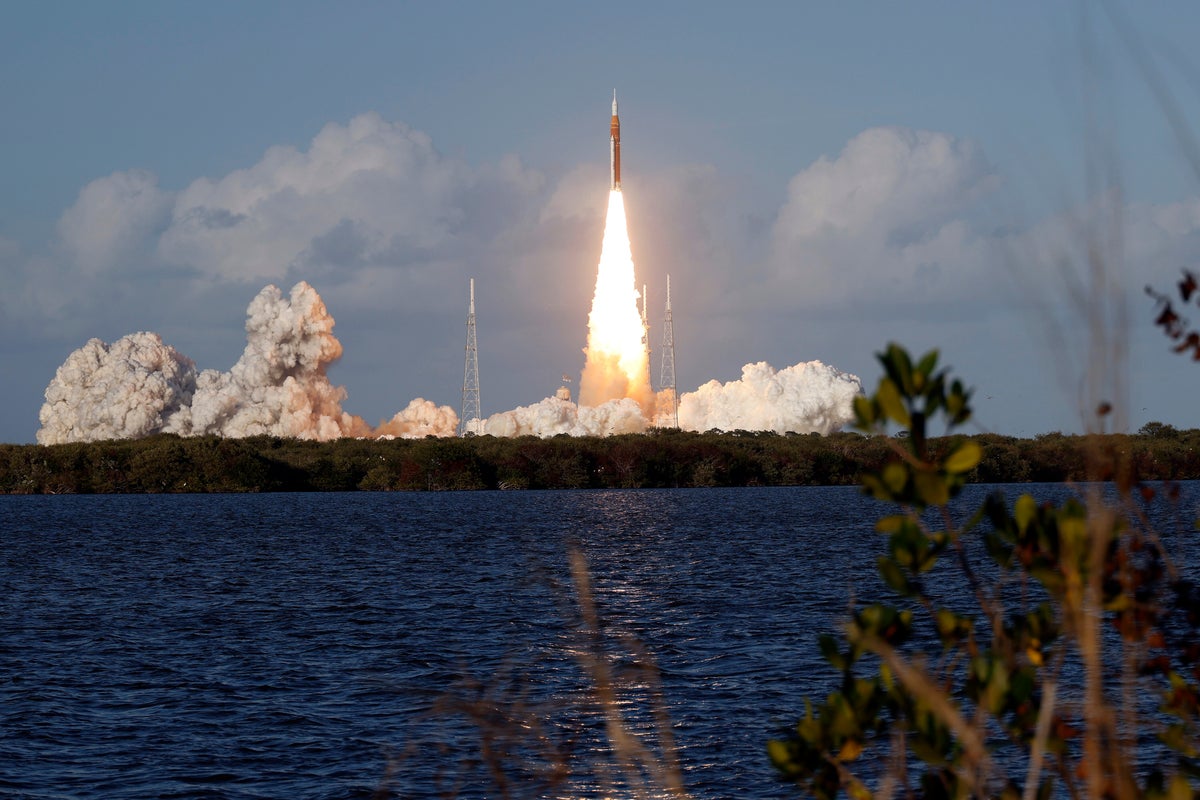
Thursday 2 April 2026 14:44 , Andrew GriffinHours into the Artemis II mission, it was hit by problems. With the toilet.
How Artemis II suffered toilet trouble shortly after lift-off
Artemis II is a fiery reminder of our eternal fascination with the mysteries of the moon
Thursday 2 April 2026 14:40 , Andrew GriffinI wrote something a bit more personal about why we love the Moon – and why that’s not as straightforward as we thought.

Artemis II is a fiery reminder of our eternal fascination with the moon