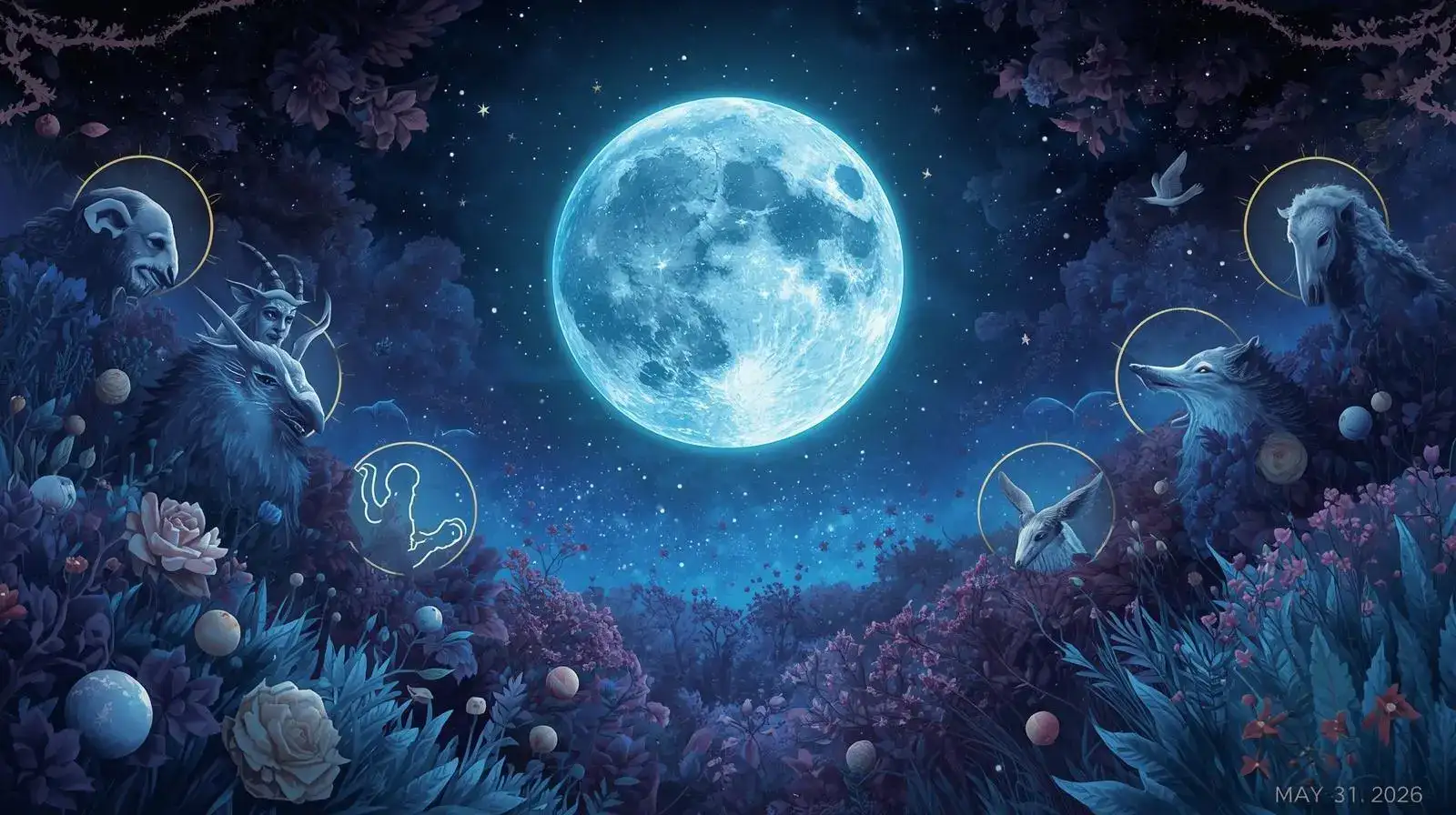
Skywatchers pay attention! Get ready for a rare treat at the end of May as 2026 delivers an unusual Blue Moon. The lunar event will light up the early morning sky on May 31, marking the second Full Moon of the month. Astronomy enthusiasts will also have several other major Moon events to watch for during the rest of the year, including eclipses and Super Moons. According to the published lunar calendar, 2026 still has plenty of stunning nights ahead for anyone willing to look up.
Rare Blue Moon
A rare Blue Moon is coming May 31, giving skywatchers one of the most talked-about lunar events of 2026. The Full Moon will reach peak illumination at 4:45 a.m. EDT on Sunday, May 31. What makes this event special is that it will be the second Full Moon to appear during the month of May, officially earning the title of a Blue Moon.
The Moon appears full when Earth sits directly between the Sun and the Moon, allowing sunlight to fully illuminate the lunar surface facing our planet. As the Moon continues orbiting Earth, the angle of reflected sunlight changes, creating the familiar lunar phases seen throughout the month.
Why is the May Blue Moon rare?
The May 31 lunar event stands out because Blue Moons do not happen often. In this case, the first Full Moon of the month — known as the Flower Moon — appeared on May 1 at 1:23 p.m. EDT. Now, a second Full Moon will close out the month just 30 days later, as per a report by Astronomy.
The lunar calendar for 2026 also includes several other major celestial events, including a total lunar eclipse in March and a partial lunar eclipse in August.
ALSO READ: China wouldn't let Marco Rubio in, so he did something nobody in US politics has ever done
Which Full Moons are still coming in 2026?
After the Blue Moon arrives in May, several more Full Moons will follow through the rest of the year. The Strawberry Moon appears on June 29 at 7:57 p.m. EDT, followed by the Buck Moon on July 29 at 10:36 a.m. EDT.
A partial lunar eclipse accompanies the Sturgeon Moon on Aug. 28 at 12:19 a.m. EDT, while the Corn Moon rises Sept. 26 at 12:49 p.m. EDT.
The Hunter’s Moon arrives Oct. 26 at 12:12 a.m. EDT.
Two Super Moons are also still ahead in 2026. The Beaver Moon appears Nov. 24 at 9:54 a.m. EDT, followed by the Cold Moon on Dec. 23 at 8:28 p.m. EDT. Earlier in the year, the Wolf Moon on Jan. 3 was also classified as a Super Moon, as per a report by Astronomy.
What can skywatchers see in May?
Beyond the approaching Blue Moon, May’s night sky is already offering impressive viewing opportunities.
On Wednesday, May 20, the waxing Moon passed 3 degrees north of Jupiter at 9 a.m. EDT. Later in the evening, the Moon moved into the constellation Cancer the Crab and appeared just over 7 degrees east of Jupiter.
Venus, positioned in western Gemini, also remained visible alongside the Moon and Jupiter, tracing the plane of the ecliptic across the sky.
Skywatchers looking slightly above and left of the Moon could also spot M44, better known as the Beehive Cluster. The open star cluster sits in central Cancer and can sometimes be visible to the naked eye, though the Moon’s brightness may make viewing more difficult.
At the time, the Moon was still only about 25 percent illuminated, giving observers a better chance to catch the famous cluster during the evening hours.
With a Blue Moon, eclipses and multiple Super Moons still ahead, 2026 is shaping up to be a memorable year for anyone following the night sky.
FAQs
When is the 2026 Blue Moon?
The Blue Moon peaks on May 31 at 4:45 a.m. EDT.
What makes a Blue Moon special?
It happens when two Full Moons occur in the same month.