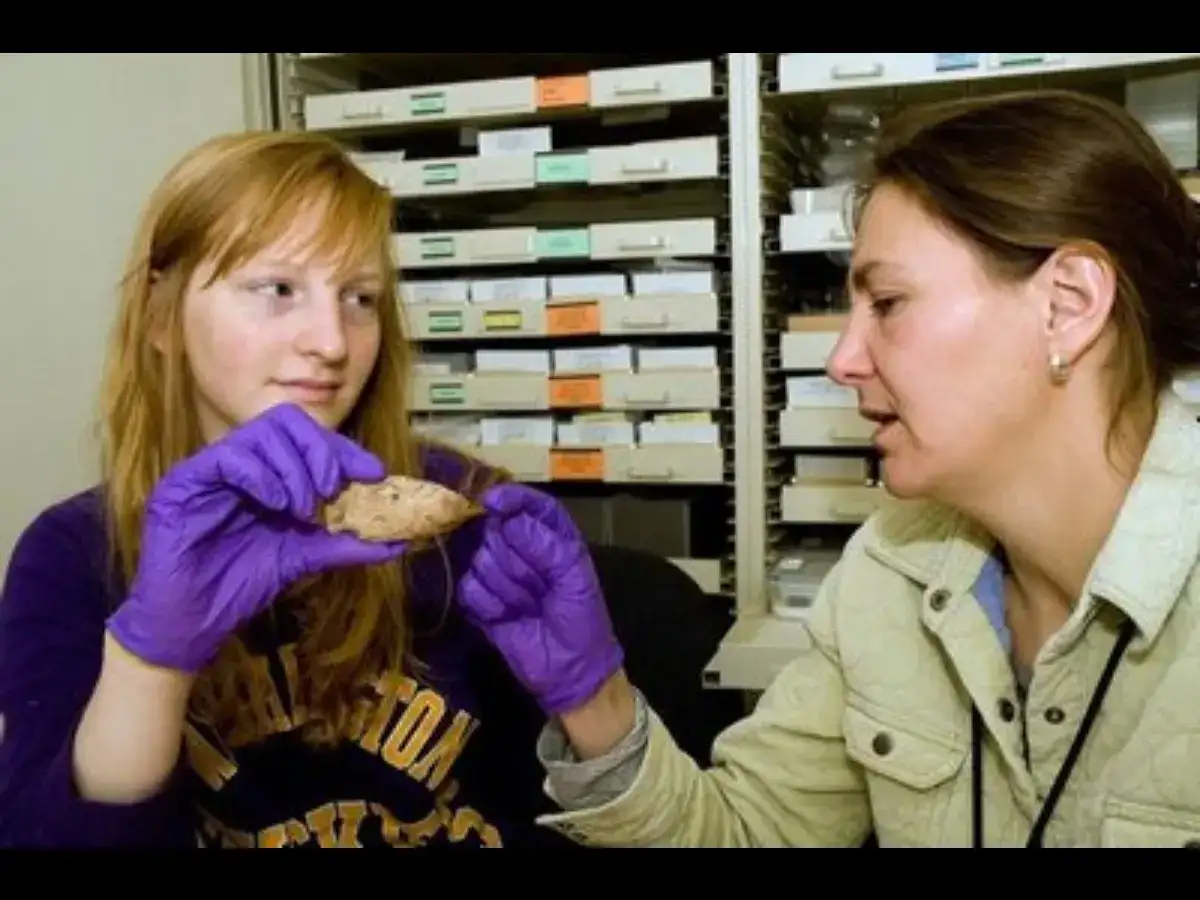
What started out to be just another regular day at the University of Washington became something completely different when freshman Ellen Van Wyk found a small stone point close to the UW Botany Greenhouse in 2009. In itself, the object was unremarkable. However, after some investigation by archaeologists from the Burke Museum, the find proved to be evidence of human habitation in Seattle thousands of years prior to the construction of the university.
This incredible discovery happened because the artifact did not go unnoticed. Specialists documented the object, dug up the soil around it, and related it to a much longer history of Native Americans being present in the Pacific Northwest.
A tiny artifact resulted in a larger search
The University of Washington claims that Van Wyk discovered the projectile point while working in the area of the greenhouse in late October of 2009. Following the discovery, the specialists from the Burke Museum performed some excavations in the form of small test pits and unearthed more stone tool fragments. This step was important for archaeologists who were not just making guesses about the artifact. The object was carefully analyzed together with the territory where it was discovered.
It was also mentioned by researchers that this was the first such discovery on campus in nearly 90 years. There was something unusual in the place of discovery. This was no remote archaeological expedition or excavation in the distant wilderness. The discovery happened close to a campus greenhouse from which students and staff would frequently walk by.
As specialists say, this is exactly how archaeology starts. One day, an object turns up unexpected, leading to discovering its much more significant story that lies underneath regular land.
The Burke Museum specialists described the artifact
They said that the object was not a simple arrowhead, but a projectile point. It measured three inches long and about 1.5 inches wide. Based on analysis, the object was estimated as being between 4,000 and 6,700 years old. This discovery changed from being an object related to recent history to the clear evidence of people using the lands thousands of years ago.
Burke Museum was crucial due to the fact that archaeology and studies of Native American cultures were vital for its mission. People at the museum had all the skills, knowledge, and resources necessary to assess the artifact. Archaeologists frequently state that the significance of such small objects lies in their context and documentation. Indeed, a tiny thing becomes historical in significance if it is documented, studied, and preserved.