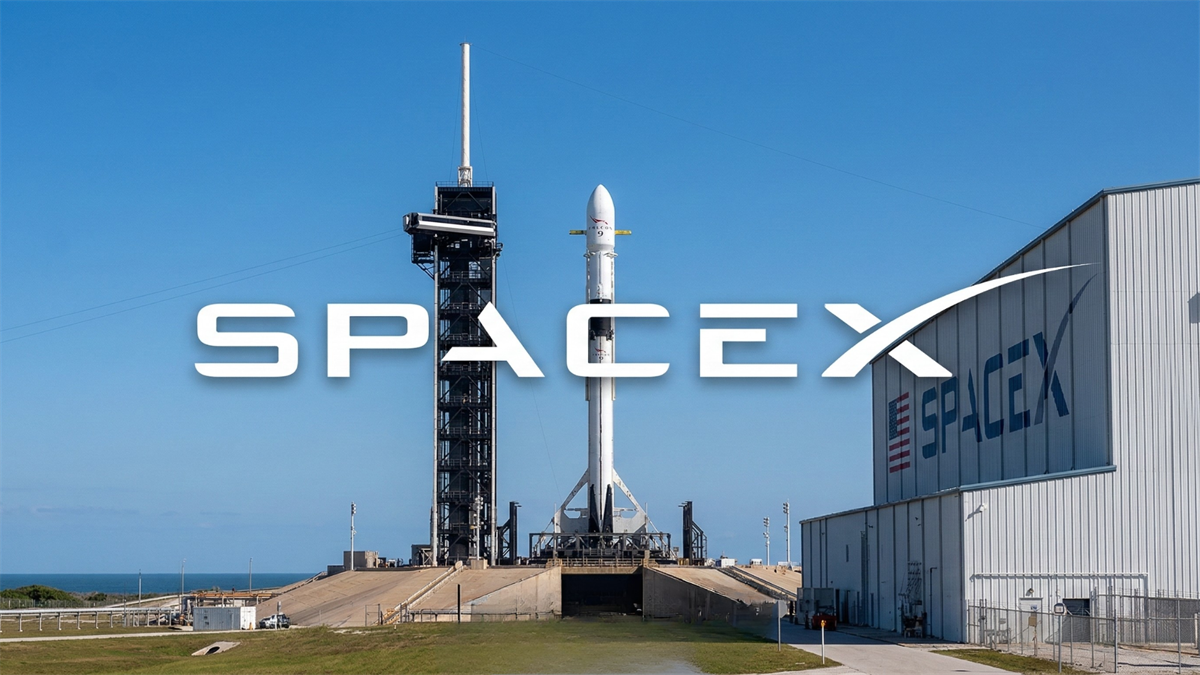
The space sector has been one of the most exciting areas of the market in 2026, and the excitement is only building. Reports that SpaceX could file its prospectus as soon as this week, ahead of a potential June IPO, have injected fresh momentum into a sector already generating compelling stories of its own.
A potential SpaceX listing at a rumored valuation of $1.75 trillion would be one of the largest IPOs in history. And in the lead-up to that moment, capital is flowing into space infrastructure names that stand to benefit most from the sector's continued expansion. Three names in particular are worth paying close attention to right now.
Intuitive Machines: The Lunar Infrastructure Play
Intuitive Machines (NASDAQ: LUNR) is one of the most established names in commercial lunar services. The company provides end-to-end lunar mission capabilities through NASA's Commercial Lunar Payload Services program.
It is building what could become critical cislunar infrastructure through its $4.82 billion Near Space Network Services contract.
That contract alone, first announced near the end of 2024, represents multi-year recurring revenue visibility at a scale few space companies can match. More recently, on May 18, the company announced that it had won a $20 million NASA contract for the Lunar Reconnaissance Orbiter Camera and ShadowCam. The stock is up 100% year to date, driven by both sector excitement and genuine fundamental progress. Q1 2026 revenue came in at $186.73 million, with a record backlog of $1.1 billion. Management has guided 2026 revenue of up to $1 billion.
Investors should be clear-eyed about the setup, however. Q1 results missed both revenue and earnings per share (EPS) estimates, and the stock’s consensus rating is Hold across 13 analysts, with a price target of $28.45, implying downside from current levels. Short interest of 28.15% reflects meaningful skepticism. For investors with a longer-term horizon and conviction in the lunar economy, the story remains compelling, though, and definitely worth keeping on watch.
Redwire: Space Infrastructure With a Defense Tailwind
Redwire (NYSE: RDW) designs and manufactures mission-critical hardware for civil, national security, and commercial space markets. Its offerings include deployable solar arrays, antennas, robotic arms, and in-space manufacturing systems. It sits across a wide range of government and commercial space programs and benefits directly when sector spending accelerates.
The stock is up close to 85% year to date, thanks to the sector-wide momentum, improving fundamentals, and a rapid pace of contract wins.
Q1 2026 revenue grew 57.9% year over year to $96.97 million, and the record backlog of $498 million grew 71% year over year.
This week, Redwire announced a new multi-year contract to deliver NATO's next-generation Penguin Mk3 tactical UAS, and the company is participating in SOF Week 2026.
Institutional ownership is impressive, with inflows of over $1.2 billion over the prior 12 months, compared to just $24 million in outflows.
Analysts hold a consensus Moderate Buy rating, with a price target of $14.22, which is close to recent prices. For investors focused on the multi-year trajectory of a company supplying hardware across both defense and space programs, the fundamental momentum is difficult to ignore.
Voyager Technologies: The Commercial Space Station Play
Voyager Technologies (NYSE: VOYG) is the most forward-looking name on this list. The company operates across three segments: Defense and National Security, Space Solutions, and Starlab Space Stations. That third segment is what sets it apart. Voyager holds a majority stake in Starlab, the commercial space station being developed to succeed the ISS upon its decommissioning in 2030.
The stock is up over 40% year to date and trading near a major area of resistance and potential breakout inflection point. Q1 results showed a record backlog of $275 million, up 54% year over year, with management raising its full-year 2026 revenue guidance. Most recently, Voyager deployed Red Hat Enterprise Linux on its LEOcloud Space Edge infrastructure on the ISS, an early proof-of-concept for the in-space computing capabilities Starlab is being designed to offer at scale.
TD Cowen initiated coverage of this stock on April 20 with a Buy rating, citing Starlab's optionality as a key differentiator. Citigroup, most recently, boosted its target from $36 to $44, which reflected almost 30% upside potential at the time. Overall, the consensus across 13 analysts is Moderate Buy, with a price target of $41.36, implying moderate upside. The 2030 ISS decommissioning creates a structural demand driver for Starlab that is largely independent of near-term market sentiment, making Voyager one of the more interesting long-term stories in the sector right now.
The article "3 Space Infrastructure Stocks Gaining Momentum Ahead of the SpaceX IPO" first appeared on MarketBeat.